Breakfast & Brunch
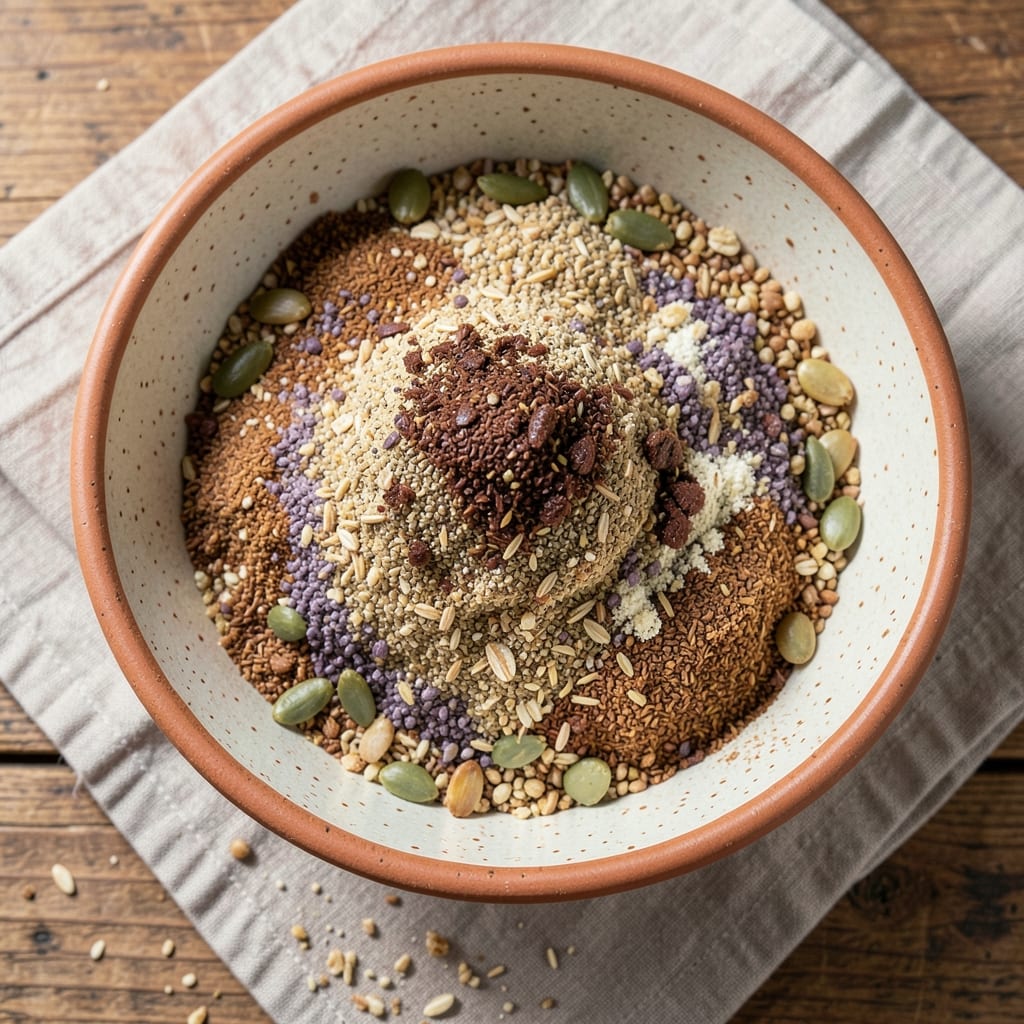
This 10-grain pancake mix recipe transforms your morning routine with nutty, fluffy stacks that taste like a bakery breakfast. The secret lies in blending whole grains—buckwheat, amaranth, quinoa, and more—with classic pancake flour for texture and depth. No fancy equipment needed, just a whisk, bowl, and 10 minutes of prep time before the stove. The magic happens in the batter: light, airy, and packed with protein, thanks to the grain blend. You’ll mix dry ingredients first, then fold in wet components until just combined—overmixing is the enemy of fluff. Cooking them on medium heat ensures a golden-brown crust with tender centers, and the nutty flavors shine when topped with maple syrup or fresh berries. What you’ll end up with is a restaurant-quality stack that’s heartier than traditional pancakes but still quick to make. The grains add subtle earthiness, while the buttermilk base keeps them light and crispy at the edges. Perfect for weekend brunches or a protein-packed weekday breakfast. Serve with Greek yogurt, sliced bananas, or a drizzle of honey for extra flavor. Let’s get cooking!
Ingredients for 10 grain pancake mix
Ten whole grains plus classic staples for pancakes that taste like bakery magic.
| Ingredient | Amount | Notes |
|---|---|---|
| Buckwheat Flour 🌾 | ½ cup | For nutty depth and texture |
| Amaranth Flour 🌾 | ¼ cup | Earthy flavor, high protein |
| Quinoa Flour 🌾 | ¼ cup | Light texture, balanced taste |
| All-Purpose Flour 🌾 | 1 cup | Classic base for fluffiness |
| Oat Flour 🌾 | ¼ cup | Creamy texture, subtle sweetness |
| Brown Rice Flour 🌾 | ¼ cup | Mild flavor, sturdy structure |
| Spelt Flour 🌾 | ¼ cup | Nutty, slightly sweet profile |
| Chickpea Flour 🌾 | ¼ cup | Protein boost, neutral taste |
| Flaxseed Meal 🌾 | 2 tbsp | Omega-3s and binding power |
| Baking Powder 🧂 | 1 ½ tsp | Diamond Crystal preferred |
| Salt 🧂 | ½ tsp | Fine sea salt preferred |
| Cinnamon 🌶️ | 1 tsp | Warmth without overpowering |
| Vanilla Extract 🍯 | ½ tsp | Pure extract, not imitation |
| Buttermilk 🥛 | 1 ¼ cups | Full-fat for best flavor |
| Large Eggs 🥚 | 2 whole | Room temperature preferred |
| Unsalted Butter 🧈 | ½ cup | Softened for easy mixing |
| Pure Maple Syrup 🍁 | ¼ cup | Grade A for serving |
The grains are the stars here—Bob's Red Mill or King Arthur flours are ideal for consistent texture. If you're buying whole grains and grinding them yourself, toast them lightly first to deepen the nutty flavors. Buckwheat and amaranth can be pricey, so Trader Joe's often has good bulk options. For the flours, make sure they're labeled 'flour' and not 'meal'—the finer grind blends better. The flaxseed meal is non-negotiable for binding and nutrition, but ground flaxseed from a dark jar keeps best.
No buckwheat flour? Substitute with sorghum flour at the same amount—similar texture, slightly sweeter. Short on amaranth? Millet flour works too, though it's less protein-packed. The buttermilk can be homemade (just mix milk with a splash of vinegar) if you're out. For the butter, European-style melts better but any unsalted works. Want extra fluff? Add 1 tsp baking soda to the dry mix, but reduce baking powder to 1 tsp. The maple syrup should be Grade A—cheaper brands taste artificial.
Store the dry mix in an airtight container for up to 3 months—it's perfect for quick breakfasts. The wet ingredients should be mixed fresh, but you can pre-measure them in small jars for 1 week. These pancakes freeze beautifully—cook, cool, then stack with parchment between each. Reheat in a toaster or oven for 2-3 minutes at 350°F. Double the mix and freeze half for lazy mornings.
Why You'll Love This Recipe
- No Mix-Up Needed: I swear by this blend—just toss the dry ingredients into a jar, and you’re ready. No measuring cups mid-breakfast, no last-minute flour panic. The buckwheat and amaranth add nuttiness without extra work; the oat flour keeps it light. Honestly, I’ve made it in my sleep (and have).
- Earthy Yet Familiar: That first bite? Rich, slightly toasty, with a hint of sweetness from the quinoa. It’s not your grandma’s pancakes—it’s got depth, like a latte for your breakfast plate. Between us, the amaranth gives it this subtle, almost chocolatey undertone that makes it feel fancy.
- Breakfast for Any Crowd: Pack these for a picnic, freeze them for lazy mornings, or serve them at brunch with maple syrup and berries. They’re sturdy enough for kids (my picky eater actually finishes hers) but sophisticated enough for guests. Plus, the mix keeps for weeks—no sad, dried-out pancakes here.
- Budget Meets Nutrition: Amaranth and quinoa flour might sound fancy, but they’re cheaper than you’d think, especially when bought in bulk. You get protein-packed pancakes that’ll keep you full, and leftovers reheat like a dream. I’ll be real: I make a double batch on Sundays just to avoid decision fatigue.
Step-by-step instructions for 10-Grain pancake mix
Here's how to blend these unique flours into golden, fluffy pancakes with nutty complexity.
Whisk Dry Ingredients for Perfect Texture
In a large mixing bowl, combine all the dry ingredients exactly as listed: the 0.5 cup buckwheat flour, 0.25 cup amaranth flour, 0.25 cup quinoa flour, 1 cup all-purpose flour, 0.25 cup oat flour, 0.25 cup brown rice flour, 0.25 cup spelt flour, and 0.25 cup chickpea flour. Add the 2 tbsp flaxseed meal, 1.5 tsp baking powder, 0.5 tsp salt, 1 tsp cinnamon, and 0.5 tsp vanilla extract.
Use a whisk to gently combine everything until you see no more flour streaks. The flaxseed meal will help bind these diverse flours together, creating a cohesive batter. Don't overmix—just until the ingredients are evenly distributed. This prevents developing gluten that would make your pancakes tough instead of fluffy.
Mix Wet Ingredients to Smooth Perfection
In a separate bowl, combine the 1.25 cups buttermilk, 2 whole large eggs, and 0.5 cup softened unsalted butter. Whisk vigorously for about 1 minute until the mixture is completely smooth and the butter is fully incorporated. The buttermilk's acidity will react with the baking powder, creating lift, while the butter adds richness that balances the earthy flours.
I like to use room-temperature eggs here—they blend more smoothly and create a lighter batter. If your butter isn't quite soft enough, microwave it in 10-second bursts until it reaches that perfect spreadable consistency. The mixture should be thick but pourable, with no visible butter lumps remaining.
Combine Wet and Dry for Ideal Batter Consistency
Pour the wet ingredients into the dry ingredients bowl and gently fold everything together using a spatula. Start slowly to avoid creating air pockets, then mix just until the batter comes together—you should still see some dry flour streaks. The batter should be thick but flow easily when you lift the spatula. If it's too thick, add 1-2 tablespoons of water to reach the perfect consistency for pouring.
This is where the magic happens—the diverse flours create a complex flavor profile while maintaining a tender texture. The oat and brown rice flours add body, while the buckwheat and amaranth contribute their signature nutty, earthy notes. Let the batter rest for 5 minutes before cooking—this allows the flaxseed to fully hydrate and the flours to fully absorb the liquid.
Cook Golden Pancakes with Perfect Edges
Heat a nonstick skillet or griddle over medium heat until it's hot enough that a drop of water sizzles and evaporates instantly. Add 1 tablespoon of butter to the pan and let it melt, coating the surface evenly. Pour ¼ cup of batter for each pancake, spreading it slightly to form a ¼-inch thick circle.
Cook until bubbles form on the surface and the edges look set—about 2-3 minutes. Here's the thing—don't flip too early. You'll know it's ready when the edges look dry and the top has a few small bubbles that pop when you touch them. Flip carefully and cook the other side for another 1-2 minutes until golden brown. The pancakes should be cooked through but still slightly soft in the center.
Serve Warm with Maple Syrup
Transfer the cooked pancakes to a warm plate and keep them covered to maintain heat. Repeat with the remaining batter, adding more butter to the pan as needed. For serving, drizzle with the 0.25 cup pure maple syrup and watch it pool beautifully in the pancakes' crevices. The syrup enhances the pancakes' nutty flavors while adding natural sweetness that complements the complex flour blend.
These pancakes should be tender yet sturdy enough to hold their shape, with a slightly crisp edge and a soft, fluffy interior. The flavor profile is where they truly shine—each bite delivers a balance of sweetness from the maple and buttermilk, warmth from the cinnamon, and depth from the buckwheat and amaranth. Serve immediately while they're at their peak texture and warmth.
Pro Tips For Making 10 Grain Pancake Mix
- Sift the Flours Together: Mixing these five flours—especially buckwheat and amaranth—creates a cloud of dust that’ll make you sneeze if you don’t handle it right. Use a fine-mesh sieve and tap it gently over a bowl, or you’ll end up with a gritty pancake that tastes like you’re chewing on sand.
- Toast the Oat Flour First: I learned this the hard way—raw oat flour can make pancakes gummy. Lightly toast it in a dry pan over medium heat for 3-4 minutes until it smells nutty, then cool before mixing. It adds depth and keeps the texture light.
- Let the Batter Rest: Skipping this step means dense, rubbery pancakes. After mixing, let the batter sit for 10 minutes—this lets the flours absorb liquid and the flavors meld. Yes, even if you’re impatient like me.
- Use a Nonstick Skillet—But Not Too Hot: These flours burn faster than all-purpose, so medium-low heat is your friend. If the pan’s too hot, you’ll get a burnt bottom before the center cooks. A well-seasoned cast iron works, but nonstick is safer for beginners.
Pro cooking tips for great 10 grain pancake mix
Flour Blending Secrets
The key to perfect texture is blending flours with different properties. Start by whisking the dry ingredients together in this order: all-purpose flour first to create a base, then the whole grains (buckwheat, amaranth, quinoa) last. This prevents clumping from the finer grains. Use a fine-mesh sieve to sift the dry mix into your bowl—this aerates the flours and prevents lumps. For extra fluffiness, I like to add 1 tablespoon of cornstarch to the dry mix, which absorbs moisture and creates a lighter texture. 🌾
Buttermilk Magic
Never skip the 5-minute rest after combining wet and dry ingredients. This allows the buttermilk to fully activate the baking powder, creating maximum lift. For extra tang, I add ½ teaspoon of white vinegar to the buttermilk before mixing. The acidity enhances the nutty flavors of the grains and balances the sweetness. If your batter seems too thick, add 1 tablespoon of warm water at a time until it reaches the perfect consistency—it should flow like heavy cream but still coat the back of a spoon.
Heat Control Tips
Medium heat is crucial—too hot and your pancakes burn before cooking through, too cool and they turn out gummy. Test your pan's readiness by sprinkling a few drops of water—they should sizzle and evaporate instantly. For even cooking, I use a cast-iron skillet preheated for 3 minutes before adding butter. The cast iron maintains consistent heat better than nonstick, creating that perfect golden crust. If your pancakes stick, your pan isn't hot enough—wait an extra minute before pouring the batter. 🔥
Flipping Technique
The moment of truth is flipping! Look for small bubbles forming on the surface and edges that look dry—this means the pancake is ready. Use a spatula to gently lift the pancake, then flip with confidence. If it resists, it's not ready yet. For perfectly round pancakes, I use a ¼-cup measuring cup to portion the batter before spreading it slightly with the back of the spatula. This ensures consistent thickness and even cooking. The secret to crispy edges is cooking each side for exactly 2 minutes—no more, no less!
Resting for Fluff
Never skip the 5-minute rest after mixing the batter—this is when the flaxseed meal fully hydrates and the flours absorb all the liquid. During this time, I like to cover the bowl with a damp towel to prevent a skin from forming. The resting period also allows the baking powder to fully activate, ensuring maximum rise. For extra fluff, I add ½ teaspoon of baking soda to the dry mix (reduce baking powder to 1 teaspoon). This creates tiny air pockets that make the pancakes light as air. 💫
Butter Matters
Use European-style unsalted butter for the best flavor and melt—it has a higher fat content that creates a richer, more flavorful crust. Softened butter should be 65°F—if it's too cold, it won't blend smoothly into the wet ingredients. For extra richness, I add 1 tablespoon of melted butter to the dry mix before combining with the wet ingredients. This creates a tender crumb and enhances the nutty flavors of the grains. If your butter is too hard, microwave it in 5-second bursts until it's just soft enough to press with your finger.
Nutrition facts
Frequently asked questions
Can I make these pancakes without buttermilk?
Yes! Mix 1.25 cups milk with 1 tablespoon lemon juice or vinegar, then let it sit for 5 minutes to curdle. This homemade buttermilk works perfectly in the recipe. For extra richness, use whole milk instead of reduced-fat. The acidity is key for fluffy texture—don't skip the waiting time!
How do I store leftover pancakes?
Keep cooked pancakes in an airtight container for 2-3 days at room temperature or refrigerate for up to 5 days. For longer storage, freeze them between parchment paper for 3 months. Reheat in a toaster or oven at 350°F for 2-3 minutes until warm and crispy. Never microwave—it makes them soggy!
Why did my pancakes turn out dense?
Overmixing the batter develops gluten, making pancakes tough. Mix just until combined—you should still see dry flour streaks. Also check your baking powder (it should be fresh) and ensure you're using medium heat (not high). If the batter was too thick, add 1 tbsp water at a time. The flaxseed meal needs 5 minutes to hydrate too!
Can I substitute any of the grains?
Yes! Swap any grain for equal amounts of similar texture: sorghum for buckwheat, millet for amaranth, or teff for quinoa. For extra protein, add 2 tbsp vital wheat gluten to the dry mix. Avoid heavy grains like whole wheat—they'll make pancakes dense. Test substitutions with small batches first!
Are these pancakes gluten-free?
No, they contain wheat flour (all-purpose and spelt). For a gluten-free version, replace all wheat flours with a 1:1 gluten-free blend (like Bob's Red Mill) and add ½ tsp xanthan gum to the dry mix. The texture will be slightly different but still delicious! Check all flour labels for hidden gluten.