
Desserts
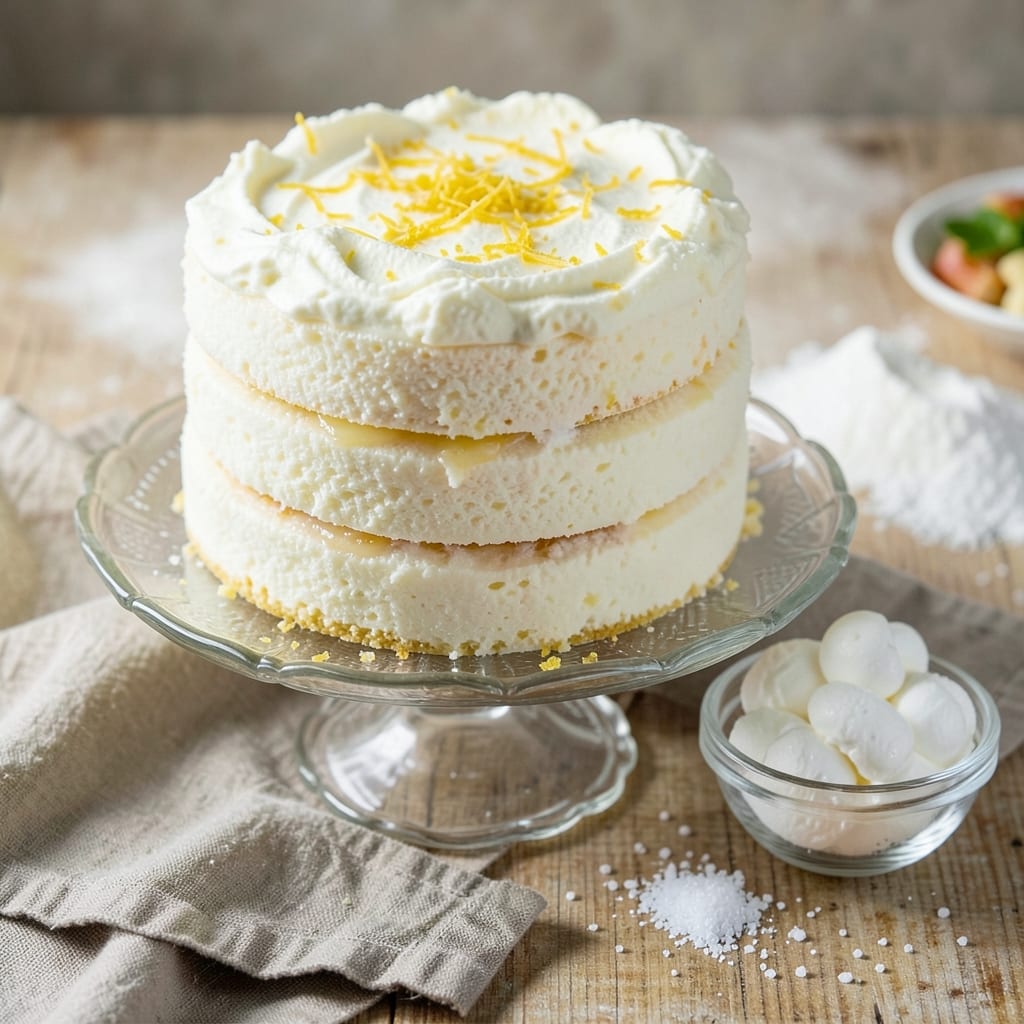
This 2-ingredient lemon angel food cake delivers restaurant-quality lightness with just eggs, flour, and citrus—no fancy equipment or complicated steps required. 💛 The secret lies in whipping egg whites to stiff peaks, creating that signature airy texture while lemon zest and juice infuse bright, tangy flavor into every tender crumb.
What makes this recipe truly remarkable is its simplicity: no butter, no sugar, no mixing bowls—just a single tin and a few essential techniques. The cake bakes up with a golden dome, crisp edges, and a melt-in-your-mouth center, all while staying refreshingly light. Perfect for summer gatherings or spontaneous dessert cravings, this version proves you don’t need complexity to achieve elegance.
By the time it emerges from the oven, you’ll have a cake that’s impossibly light yet sturdy enough to slice neatly. The lemon flavor shines through without overpowering, creating a dessert that’s both vibrant and sophisticated. Best served immediately with fresh berries or a dollop of whipped cream, though it holds up beautifully for a day or two if stored properly.
This recipe is designed to build confidence in home bakers—no special skills required, just patience for whipping those egg whites and a steady hand when folding in the dry ingredients. The result? A cake that tastes like it came from a patisserie, not a kitchen shortcut. Let’s get baking!
Ingredients for 2 ingredient lemon angel food cake
Three core ingredients transform into a cloud-like lemon cake with just eggs, flour, and citrus.
| Ingredient | Amount | Notes |
|---|---|---|
| Large Egg Whites 🥚 | 12 whole | Fresh, room temperature preferred |
| All-Purpose Flour 🌾 | 1 ½ cups | Sifted, bleached preferred |
| Granulated Sugar 🍚 | 1 ¼ cups | Superfine preferred for even texture |
| Lemon Zest 🍋 | 1 tbsp | From 1 large organic lemon |
| Fresh Lemon Juice 🍋 | ½ cup | Strained, no pulp |
| Cream of Tartar 🧂 | ¼ tsp | Stabilizes egg whites |
| Salt 🧂 | ¼ tsp | Fine sea salt |
| Vanilla Extract 🌸 | ½ tsp | Pure alcohol-free preferred |
The egg whites are non-negotiable—fresh, room-temperature whites whip to stiffer peaks when they're not cold. Carton eggs often have yolks separated, but if you must use whole eggs, separate them carefully over a bowl (the yolk is your backup for another recipe). For flour, King Arthur or Bob's Red Mill brands sift beautifully, but any all-purpose will work if you take the time to sift it yourself. The lemon should be organic if possible—the zest needs to be vibrant yellow, not bitter or white. I always buy a few extra lemons and freeze the juice for future baking projects.
No cream of tartar? Substitute 1/4 tsp lemon juice—it's essentially the same acidity. Running short on vanilla? Almond extract at half the amount gives a similar floral depth, though the flavor profile shifts slightly. The sugar should be superfine if available, but regular granulated works if you pulse it in a food processor first. For the lemon juice, freshly squeezed is a must—bottled juice lacks the bright acidity needed for proper balance. If you're in a pinch, store-bought lemon juice from a glass bottle (like ReaLemon) is the next best thing, but it won't have the same zing.
This cake keeps best in an airtight container at room temperature for 2 days, though it's at its peak the first day. For longer storage, wrap tightly in plastic wrap and refrigerate for up to 5 days—though it loses some of its lightness. Freezing isn't recommended as the texture becomes dense. The cake's structure relies entirely on the egg whites, so avoid cutting until completely cool (at least 2 hours). Serve with whipped cream or fresh berries to complement the citrus notes without overpowering them.
Why You'll Love This Recipe
- No Mixer Needed: I swear by this recipe when my KitchenAid’s on strike—just whip those egg whites by hand (or use a whisk) until they’re glossy clouds. No fancy equipment, no stress.
- Zesty Magic: That bright lemon juice and zest cut through the sweetness like a summer breeze. Honestly? The first bite makes me want to skip dessert and just eat cake for dinner.
- Weekend Brunch Star: Serve it plain for a light breakfast, or drizzle with honey and berries for a brunch crowd-pleaser. My daughter’s friends always ask for the recipe—now they’ll finally get it.
- Budget-Friendly Luxury: Four ingredients, zero guilt. Egg whites and flour stretch further than you’d think, and the sugar’s measured just right. Leftovers? Toss them in a jar for a grab-and-go snack.
Step-by-step instructions for light-as-air lemon angel food cake
This cake relies on precise technique—whisking egg whites to stiff peaks is where the magic happens.
👨🍳 Step 1: Prepare the Egg Whites for Whipping
Separate the 12 whole large egg whites from yolks, ensuring no trace of yolk remains—even a drop will prevent proper whipping. Place them in a spotlessly clean, grease-free mixing bowl. I use a glass bowl for this because it's non-reactive and makes it easy to spot any yolk contamination.
Add the 0.25 teaspoon cream of tartar and 0.25 teaspoon salt to the egg whites. These ingredients stabilize the whites and help them reach those critical stiff peaks. Use a fine-mesh sieve if needed to remove any remaining yolk fragments. The bowl should be completely dry—any moisture will interfere with the whipping process.
🍳 Step 2: Whip Egg Whites to Stiff Peaks
Using a stand mixer fitted with the whisk attachment, begin whipping the egg whites on low speed for 1 minute to combine. Gradually increase the speed to high and whip for 5-7 minutes until soft peaks form. You'll know they're ready when the peaks hold their shape but still bend slightly at the tip.
This is the most critical step—don't rush it. I like to stop occasionally to scrape down the sides of the bowl with a rubber spatula. The egg whites should be glossy and thick enough to hold their shape when the whisk is lifted. If they're not quite there after 7 minutes, keep whipping for another minute or two. Over-whipping can make them grainy, but under-whipping will result in a dense cake.
👨🍳 Step 3: Gradually Add Sugar and Flour
With the mixer still running on high speed, slowly add the 1.25 cups granulated sugar in a thin, steady stream over 2-3 minutes. This gradual addition prevents the sugar from dissolving too quickly, which could deflate the egg whites. After all the sugar is incorporated, the mixture should look like ribbons of meringue forming when the whisk is lifted.
Next, sift in the 1.5 cups all-purpose flour through a fine-mesh sieve while continuing to mix on low speed. The flour should be incorporated just until no white streaks remain—overmixing here can cause the cake to become dense. Add the 1 tablespoon lemon zest, 0.5 cup fresh lemon juice, and 0.5 teaspoon vanilla extract and mix for another 30 seconds to fully combine.
🥘 Step 4: Fold in the Lemon Flavor
Gently fold the batter into a 9-inch tube pan lined with parchment paper that extends up the sides. The pan should be no wider than 2 inches—this ensures even baking and that signature tall, fluffy shape. Tap the pan gently on the counter to remove any air bubbles and smooth the top. The batter should reach just below the rim of the pan.
Here's the thing—don't overfill the pan. The batter will rise significantly during baking, and you want room for expansion. I like to leave about ½ inch of space at the top. Place the pan in a 350°F preheated oven and bake for 35-40 minutes until the top is golden brown and the cake springs back when gently pressed in the center.
⏰ Step 5: Cool and Serve Properly
Remove the cake from the oven and invert it immediately onto a wire rack. Let it cool completely in this position for at least 1 hour. This gradual cooling prevents the cake from collapsing. Once fully cooled, you can remove the parchment paper and slice it into 8 equal servings using a serrated knife.
This cake is best served at room temperature, so I recommend making it at least 4 hours ahead if possible. The flavors deepen as it sits, and the texture remains light and airy. Store leftovers in an airtight container for up to 3 days—though I doubt it'll last that long with that zesty lemon flavor.
Pro Tips For Making 2 Ingredient Lemon Angel Food Cake
- Use Room-Temp Egg Whites: Cold egg whites hide tiny fat droplets that sabotage volume—whip them at room temperature for 10 minutes before folding. I learned this the hard way when my first batch turned into sad, dense pancakes instead of fluffy clouds. Just leave them out while you zest the lemon.
- Sift Flour Twice: Angel food cake lives or dies by its texture, and clumpy flour ruins everything. Sift the flour before measuring, then sift it again right before folding—no lumps, no excuses. (Yes, it’s tedious, but your cake will thank you.)
- Don’t Overmix the Batter: Once you fold in the flour, stop mixing the second it’s just combined. Overworking the batter deflates those precious air pockets you spent 10 minutes whipping into the egg whites. Think "marble swirls," not smooth perfection.
- Bake Until the Center Springs Back: Resist the urge to pull the cake early—it’s done when the top springs back when pressed firmly (not gently) and the edges pull away from the pan. I used to cut mine at 325°F, only to watch it collapse later. Push it to 350°F if needed.
Serving suggestions for this dish
Classic Pairings
Serve slices with whipped cream—lightly sweetened, not too heavy—to complement the cake's delicate texture. I like to fold in 1 teaspoon of lemon zest into the cream for an extra citrus punch. Fresh strawberries or raspberries add vibrant color and a fruity contrast that brightens each bite. 🍓
Elegant Garnishes
Dust each slice with powdered sugar just before serving for a refined touch. A few edible lemon flowers or a sprinkle of toasted coconut flakes adds visual appeal while enhancing the tropical vibe. For a modern twist, drizzle with honey or lemon glaze made by reducing ¼ cup sugar with 2 tablespoons lemon juice over low heat.
Beverage Matchups
Pair this cake with sparkling lemonade or iced tea to refresh the palate between bites. A crisp Sauvignon Blanc from New Zealand or a light Prosecco enhances the citrus notes without overpowering them. For coffee lovers, a light roast with vanilla brings out the cake's subtle sweetness. ☕
Seasonal Variations
In summer, serve with chilled berries and a scoop of lemon sorbet to keep things light. For winter gatherings, warm spiced apple cider or mulled wine creates a cozy contrast. The cake's brightness stands up beautifully to both warm and cold pairings.
Make-Ahead Serving
Prepare the cake 1-2 days ahead and store it in an airtight container at room temperature. Reheat slices briefly in the oven at 300°F for 5 minutes if serving warm. This works perfectly for brunch buffets or holiday desserts where prep time matters. The flavors actually improve as it sits! 💫
Nutrition facts
Frequently asked questions
Can I make this lemon cake with fewer than 12 egg whites?
The recipe is designed specifically for 12 egg whites to achieve that signature light, airy texture. Using fewer would result in a denser cake. If you're short on eggs, consider making a smaller batch with 8 egg whites (about half the recipe) in a 6-inch pan instead. The structure relies entirely on properly whipped egg whites—don't substitute with other ingredients like whipped cream or aquafaba.
Why did my cake collapse after baking?
Collapse usually happens when egg whites aren't whipped to stiff peaks or the oven temperature isn't hot enough. Make sure your oven is fully preheated to 350°F and the egg whites form firm peaks that hold their shape. Also, avoid opening the oven door during baking—temperature fluctuations can cause the cake to sink. Let it cool completely upside-down on a wire rack for at least 1 hour before removing from the pan.
Can I use powdered sugar instead of granulated?
Yes, but you'll need to adjust the amount. Replace the 1.25 cups granulated sugar with 1 cup powdered sugar—it dissolves more quickly and won't provide the same structural support during whipping. The cake will still be sweet, but the texture might be slightly less stable. For best results, use superfine granulated sugar if you have it, as it incorporates more smoothly into the egg whites.
How do I make this cake gluten-free?
Replace the all-purpose flour with a 1:1 gluten-free baking flour blend (like Bob's Red Mill or King Arthur). You may need to add 1 teaspoon xanthan gum to help bind the structure. Also, sift the flour thoroughly to prevent lumps. Keep in mind the texture will be slightly denser than traditional angel food cake, but the lemon flavor will still shine through.
Is this cake vegan-friendly?
No, this recipe isn't vegan as it relies on egg whites for structure. For a vegan alternative, you'd need to use aquafaba (chickpea brine) or commercial vegan egg whites, but the texture and rise won't be identical. The traditional angel food cake method depends on properly whipped egg whites—there's no direct vegan substitute that achieves the same light, airy result. However, you could try a vegan sponge cake recipe with lemon zest for similar flavor.