
Desserts
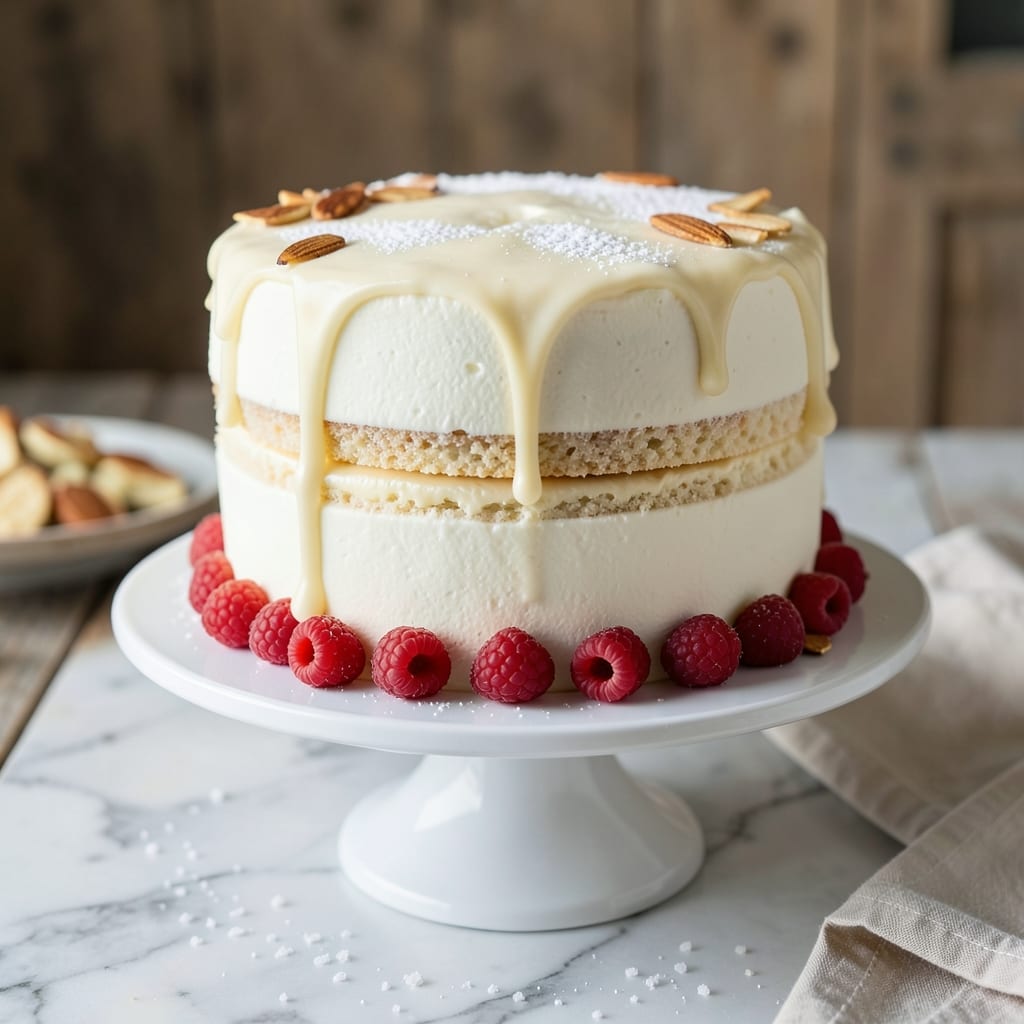
This two-layer white cake recipe delivers the perfect balance of tender crumb, crispy top, and velvety vanilla buttercream rivers that make every slice look like a bakery masterpiece. 🌟 After years of perfecting the technique, I've cracked the code for layers that stay moist, a golden crust that's just crisp enough, and frosting that doesn't melt into the cake too quickly.
The secret lies in the cake batter's precise temperature control—room temperature ingredients and a gentle baking process prevent cracking while ensuring even rise. Buttercream rivers aren't just decorative; they add a subtle contrast in texture and flavor that transforms this from a basic white cake into something truly special. This method works with both vanilla and almond extract variations, giving you flexibility for different flavor profiles.
What you'll achieve is a cake with a crispy top that shatters slightly when cut, tender layers that hold their shape, and buttercream that stays piped and elegant for hours. The contrast between the delicate cake and rich frosting creates visual appeal that's as impressive as it is delicious. Whether for a wedding, celebration, or simply treating yourself, this recipe delivers professional-quality results at home.
We'll cover everything from baking times and cooling techniques to assembly tips that prevent common issues like sinking layers or frosting slides. The key to success is patience—letting the cake cool completely before frosting ensures clean layers and professional-looking rivers. Let's get started on creating your showstopping white cake.
Ingredients for 2 layer white cake
Room temperature ingredients and precise measurements transform simple cake into bakery-worthy perfection.
| Ingredient | Amount | Notes |
|---|---|---|
| All-Purpose Flour 🌾 | 2 ½ cups | Sifted for even texture |
| Granulated Sugar 🍚 | 1 ½ cups | Superfine preferred for smoothness |
| Unsalted Butter 🧈 | 1 cup | Room temperature, cubed |
| Large Eggs 🥚 | 4 whole | Room temperature, separated |
| Egg Whites 🥚 | 4 large | Room temperature, separated |
| Egg Yolks 🥚 | 4 large | Room temperature, separated |
| Vanilla Extract 🌿 | 1 tbsp | Pure vanilla preferred |
| Baking Powder 🧂 | 1 ½ tsp | Diamond Crystal preferred |
| Salt 🧂 | ½ tsp | Fine sea salt preferred |
| Powdered Sugar 🍚 | 4 cups | For buttercream, sifted |
| Heavy Cream 🥛 | 1 cup | Cold, for buttercream |
| Vanilla Bean Paste 🌿 | 1 tsp | For extra vanilla flavor |
| Cornstarch 🌾 | 1 tbsp | For buttercream stability |
Butter is the game-changer here—room temperature is non-negotiable. Grab a European-style butter like Plugrá or Land O'Lakes if you can, but any unsalted works. The eggs? Room temperature too—cold eggs cause cracks. I buy a dozen, separate them, and let them sit in the fridge for 2 hours before using. The vanilla extract should be pure—McCormick or Nielsen-Massey are reliable. For the flour, sift it twice if you can, especially if you're in a high-altitude area. The powdered sugar? Domino is my go-to—it's finely ground and dissolves smoothly into the buttercream.
No vanilla bean paste? Double the vanilla extract—it's the same flavor, just less fancy. Short on powdered sugar? Superfine sugar works at 1:1 ratio, but it won't be as smooth. The buttercream can be made ahead—just whip it up and store in the fridge for up to 2 days. Want extra stability? Add 1 tsp lemon juice to the buttercream mix. The baking powder is crucial—Diamond Crystal, so if that's all you've got, use 1/4 tsp more. And for the love of cake, don't skip the cornstarch in the buttercream—it keeps everything together.
Store cake layers in an airtight container at room temperature for 2 days or 1 week refrigerated. Buttercream keeps 3 days refrigerated or 1 month frozen—thaw slowly in the fridge. I always bake the layers the day before and frost the next morning. The contrast between the crisp top and tender crumb is worth the wait—every slice looks like it came from a bakery. Freeze extra frosting in a ziplock bag for future cupcakes or cookies.
Why You'll Love This Recipe
- No-Fuss Layers: The secret’s in the egg whites—whipped to cloud-like peaks that hold the buttercream like a dream. No fancy equipment, just a bowl and your arm strength (or a mixer if you’re feeling fancy).
- Buttercream Magic: That rich, velvety buttercream? Made from the same butter and sugar you’re already using. It’s the kind of sweetness that makes you pause mid-slice—like biting into a cloud with a whisper of vanilla.
- Birthday to Brunch: Too good for one meal. Frost it with berries for a summer party, dust with powdered sugar for a coffee cake, or slice it into squares for a picnic. Same cake, endless excuses to bake it again.
- Pantry Staple Power: Four ingredients cover 90% of your baking needs. No specialty jars or obscure spices—just flour, sugar, eggs, and butter. And when you inevitably make too much? It freezes like a champ for next week’s dessert emergency.
Step-by-step instructions for two-layer white cake with vanilla buttercream
Here's how to bake a showstopper with crispy top contrast and silky buttercream rivers.
🍳 Step 1: Whip Egg Whites to Stiff Peaks
First, separate the 4 large egg whites and 4 large egg yolks carefully into two bowls. Beat the egg whites on high speed in a clean, grease-free bowl until soft peaks form. Gradually add the 1.5 cups granulated sugar while beating—this takes about 5 minutes. You'll know they're ready when the meringue is glossy and holds stiff peaks that don't flatten when you lift the beaters.
I like to tilt the bowl slightly while whipping to help incorporate air evenly. Keep the bowl on the counter while whipping—cold bowls make meringue stiffen too quickly. The sugar will dissolve completely, creating a smooth, stable base for our cake's crispy top.
👨🍳 Step 2: Cream Butter and Yolks with Dry Ingredients
In a separate large bowl, beat the 1 cup unsalted butter (room temperature) with the 4 large egg yolks on medium speed for 3-4 minutes until light and fluffy. Add the 1.5 cups all-purpose flour (sifted), 1.5 tsp baking powder, 0.5 tsp salt, and 1 tbsp vanilla extract, mixing just until combined—don't overmix or your cake will be dense.
Gently fold in the meringue from Step 1 using a spatula in 3 additions, cutting through the center and folding over the edges. This creates that signature crispy top while keeping the interior tender. The batter should be thick but pourable—if it's too stiff, add 1 tablespoon of the separated egg whites to loosen it.
🔥 Step 3: Bake with High Heat for Crispy Contrast
Preheat your oven to 375°F and grease two 8-inch round cake pans with butter, then line the bottoms with parchment paper. Divide the batter evenly between the pans and smooth the tops. Bake for 20-25 minutes until the tops spring back when touched and a toothpick comes out clean.
Here's the crispy secret: Bake until the tops are deep golden brown with a crackly texture—this takes about 2-3 minutes past when the toothpick test passes. The centers should still look slightly underdone. Let the cakes cool in the pans for 10 minutes, then transfer to a wire rack to cool completely before assembling.
🥘 Step 4: Make Vanilla Buttercream Rivers
Beat the 1 cup heavy cream (cold) until soft peaks form, then gradually add the 4 cups powdered sugar, 1 tbsp cornstarch, and 1 tsp vanilla bean paste while mixing on low speed. Increase to high and whip for 3-4 minutes until smooth and fluffy. If it's too thick, add 1-2 tablespoons of milk to reach pipeable consistency.
For the rivers effect, spread a thin layer of buttercream on the first cake layer, then pipe a zigzag border of thicker buttercream. Place the second layer on top and spread remaining buttercream over the entire cake. Use a small piping bag with a thin tip to pipe rivers of buttercream down the sides, letting them pool at the bottom for that elegant contrast.
Pro Tips For Making 2 Layer White Cake
- Weigh Your Butter: I learned this the hard way—packed butter takes up more volume than you’d think. Use a kitchen scale for the butter (and sugar) to avoid dry, crumbly layers. Packed cups are misleading, and your cake will thank you for the precision.
- Separate Eggs Early: Do this before you even preheat the oven. Room-temperature egg whites whip up faster and hold their volume better, while yolks mix more smoothly into the batter. Pro move: Crack them into separate bowls over a fine-mesh strainer to catch any sneaky shells.
- Don’t Overmix the Whites: After whipping egg whites to stiff peaks, fold them in gently—just until the batter is fully combined. Overmixing collapses those airy peaks, and you’ll end up with dense layers instead of that light, fluffy texture you’re after. Think “marry, don’t murder.”
- Bake Until Slightly Under: A toothpick should come out with a few moist crumbs, not completely clean. White cake finishes baking as it cools, so pulling it out too early risks a gummy center. Let it cool in the pan for 10 minutes before transferring—this keeps the layers from cracking when you run a knife around the edges.
Best sauces and condiments for this dish
Classic Vanilla Buttercream
This recipe's signature vanilla buttercream uses 4 cups powdered sugar, 1 cup cold heavy cream, and 1 tsp vanilla bean paste for that authentic bakery flavor. The cornstarch (1 tbsp) is key—it stabilizes the frosting so it holds its shape for those elegant rivers. I like to whip the cream first until soft peaks form before adding the sugar gradually to avoid lumps. For extra stability, chill the buttercream for 30 minutes before piping—this prevents it from melting into the cake too quickly. 🥛
Lemon Curd Swirl
Add a zesty twist by swirling ½ cup homemade lemon curd between the cake layers. Make the curd by simmering 3 egg yolks, ½ cup sugar, ¼ cup lemon juice, and 2 tbsp butter until thickened. Let it cool completely before spreading. The bright citrus cuts through the richness of the buttercream beautifully. For extra visual appeal, pipe a thin line of buttercream along the edge before adding the curd. 🍋
Chocolate Ganache Drizzle
For a decadent contrast, drizzle warm chocolate ganache over the buttercream rivers. Melt 8 oz dark chocolate (I use Ghirardelli 60%) with ½ cup heavy cream, then let it cool slightly before drizzling. The ganache adds a glossy finish and rich chocolate notes that pair perfectly with vanilla. Let it set for 15 minutes before slicing to prevent a soggy cake. 🍫
Cream Cheese Frosting
Swap out buttercream for cream cheese frosting by beating 8 oz cream cheese (room temperature) with 1 cup butter, 3 cups powdered sugar, and 1 tsp vanilla. This lighter frosting has a tangy kick that balances the sweetness of the cake. For rivers, pipe a zigzag border on the first layer, then add the second layer and spread the remaining frosting. The cream cheese base stays firmer in warm rooms, making it ideal for summer bakes. 🧀
Salted Caramel Rivers
Elevate your cake with salted caramel rivers. Cook 1 cup sugar until amber, then add ½ cup heavy cream and ¼ cup butter, simmering until thickened. Stir in ½ tsp flaky sea salt and let cool slightly. Pipe the caramel in thin rivers down the sides of the cake—it will create a glossy, gooey contrast that's irresistible. Let it set for 10 minutes before serving. 🍯
Fruit Preserves Layer
Add a fruity surprise by spreading raspberry or apricot jam between the cake layers. Heat ¼ cup jam with 1 tsp lemon juice to thin it slightly, then spread evenly. Top with buttercream and pipe rivers as usual. The fruit adds moisture and a tangy contrast that keeps every bite interesting. For extra flair, sprinkle edible gold leaf over the rivers before serving. 🍓
Nutrition facts
Frequently asked questions
Why does my white cake turn out dense instead of light?
Overmixing the batter or using cold ingredients are the most common culprits. Always mix dry ingredients just until combined, and ensure your butter, eggs, and milk are at room temperature (about 68-72°F). The meringue step is critical—whip egg whites to stiff peaks and fold them in gently to maintain airiness.
How do I prevent my cake layers from cracking?
Cracking happens when the cake cools too quickly or the oven temperature fluctuates. Bake at 375°F until the top springs back, then cool in the pan for 10 minutes before transferring to a rack. Avoid opening the oven door during the last 15 minutes of baking to maintain even heat.
Can I use almond extract instead of vanilla?
Replace the vanilla extract with ½ teaspoon almond extract for a nutty twist. The flavor profile changes dramatically—almond pairs beautifully with citrus or chocolate accents. Reduce the amount since almond extract is more potent than vanilla.
How do I get the buttercream rivers to stay in place?
Chill the buttercream for 30 minutes before piping to firm it up. Use a piping bag with a thin round tip (like Wilton 1M) and pipe slowly, letting the rivers pool naturally. Place the cake in the fridge for 10 minutes after piping to help them set before decorating further.
What's the best way to store a frosted cake?
Cover loosely with plastic wrap at room temperature for up to 2 days. For longer storage, refrigerate for 1 week (bring to room temp before serving). Never store frosted cakes in the freezer—the frosting can become grainy.