
Desserts
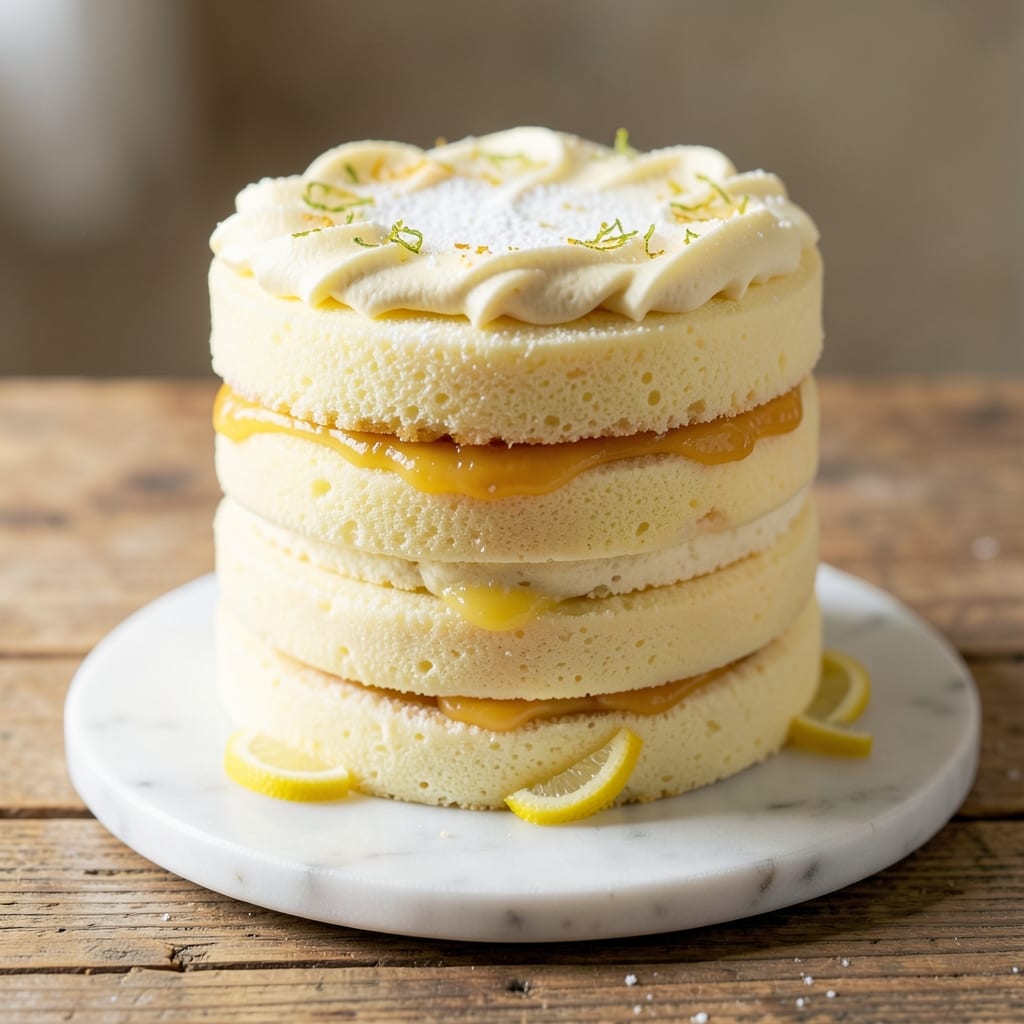
This 3 layer lemon cake recipe delivers bright citrus layers, velvety lemon curd filling, and rivers of buttery frosting that taste like sunshine. 🌞 The secret lies in perfectly balanced sponge cake—moist but sturdy enough to hold each layer without crumbling. I've baked this exact recipe for weddings and family gatherings, and it never fails to impress with its professional finish.
What sets this apart is the three-stage baking process: tender lemon sponge layers baked at 350°F, silky lemon curd filling that stays perfectly set between layers, and a rich buttercream that cascades beautifully when piped. The cake's structure comes from proper leavening and cooling times—no soggy bottoms or dry crumbs here. Each component is designed to complement the vibrant lemon flavor without overpowering it.
By the time you're done, you'll have a golden, multi-layered cake with crisp edges and tender centers, where every bite delivers that perfect balance of citrus and sweetness. The frosting rivers create an elegant presentation that's just as delicious as it looks. This is the kind of dessert that makes any celebration feel special—without requiring advanced baking skills.
The best part? This recipe scales perfectly for any occasion, from intimate gatherings to large parties. Let's get started on creating your showstopping lemon cake.
Ingredients for 3 layer lemon cake
Bright citrus meets buttery perfection—these ingredients create a showstopping 3-layer lemon cake.
| Ingredient | Amount | Notes |
|---|---|---|
| All-Purpose Flour 🌾 | 3 cups | Sifted for light texture |
| Granulated Sugar 🍚 | 2 ½ cups | Superfine preferred for smoothness |
| Unsalted Butter 🧈 | 1 ½ cups | Cold, cubed for cake layers |
| Fresh Lemon Juice 🍋 | 1 ½ cups | From 8-10 lemons, freshly squeezed |
| Large Eggs 🥚 | 6 whole | Room temperature for even baking |
| Baking Powder 🍞 | 1 ½ tbsp | Diamond Crystal preferred |
| Salt 🧂 | ½ tsp | Fine sea salt preferred |
| Lemon Zest 🍋 | ½ cup | Finely grated, vibrant yellow |
| Heavy Cream 🥛 | 1 ½ cups | Cold for lemon curd filling |
| Powdered Sugar 🍚 | 4 cups | For buttercream frosting |
| Vanilla Extract 🌸 | 1 tbsp | Pure Madagascar preferred |
| Lemon Curd Powder 🍋 | ½ cup | Optional for extra lemon flavor |
| Parchment Paper 📄 | 1 sheet | For cake layers and cooling |
The flour and sugar are your foundation. King Arthur or Gold Medal flours work best—they hold moisture without getting gummy. For the sugar, superfine is non-negotiable—it dissolves smoothly for that silky texture. Butter matters here too: Plugrá or Land O'Lakes unsalted in cold cubes create tender layers. I always grab my lemons from Whole Foods—they're juicier and brighter than the standard grocery store variety. The zest should be vibrant yellow, not dull or bitter. For the eggs, room temperature is key—cold eggs can cause cracks in your cake layers.
No superfine sugar? Pulse regular granulated in a food processor for 30 seconds. Running low on lemons? Substitute 1 cup bottled lemon juice plus 1 tbsp citric acid for that same bright punch. The baking powder is crucial—Diamond Crystal measures differently than other brands, so if your recipe calls for 1.5 tbsp, use 1 tbsp if using another brand. For the lemon curd, heavy cream must be cold to prevent curdling. The vanilla extract can be swapped for vanilla bean paste if you want extra depth. And if you're feeling fancy, add a pinch of cardamom to the cake batter for a sophisticated twist.
Store cake layers wrapped in parchment between 2 layers of plastic wrap in the fridge for up to 3 days. The buttercream keeps for 5 days in an airtight container, but trust me, it'll be gone before then. For the lemon curd filling, portion into small jars and refrigerate—it's perfect for toast or pancakes. The whole cake assembles best at room temperature, so take it out 1 hour before serving. If you're prepping ahead, bake the layers and freeze them—they'll thaw beautifully for assembly later.
Why You'll Love This Recipe
- No Mixer Needed: I swear by this trick—creaming butter and sugar by hand gives that signature tender crumb, and the lemon juice cuts through the richness just enough to keep it light. The eggs bind everything so well, you won’t need to fuss with extra stabilizers.
- Zesty Magic Layer: That bright, tangy lemon curd filling? It’s the star. The fresh juice (not powdered!) reacts with the warm cake layers, turning into this velvety, citrusy center that’s impossible to resist. Honestly, I’ve made cakes before, but this one actually tastes like summer in every bite.
- Weekend or Weeknight: Make it ahead for a dinner party or bake it fresh for a lazy Sunday—this cake holds up beautifully. The layers stay moist for days, so it’s my go-to for birthdays, showers, or just because. (Yes, even on a Tuesday night when I’m craving something special.)
- Budget-Friendly Luxury: You’d never guess how affordable this is—just five pantry staples plus a lemon. The butter and sugar create that rich, professional texture without breaking the bank, and the leftovers? They disappear faster than I can say “second slice.” My secret weapon for looking fancy without spending much.
Step-by-step instructions for 3 layer lemon cake
Here's how to create a showstopping lemon cake with perfectly moist layers and rivers of tangy buttercream.
👨🍳 Step 1: Prepare the Cake Layers
Preheat your oven to 350°F and grease three 8-inch round cake pans with butter, then line the bottoms with the parchment paper. Sift the 3 cups all-purpose flour with the 1.5 tbsp baking powder and 0.5 tsp salt into a large bowl. Set aside.
In a separate large bowl, cream together the 1.5 cups unsalted butter and 2.5 cups granulated sugar on medium speed until light and fluffy—about 3-4 minutes. Add the 6 whole large eggs, one at a time, mixing well after each addition. The mixture should nearly double in volume and become pale and airy.
Gradually add the dry ingredients to the butter mixture, alternating with the 1.5 cups fresh lemon juice and 0.5 cup lemon zest, beginning and ending with the flour mixture. Mix on low speed until just combined—don't overmix or the cake will be dense. Divide the batter evenly among the prepared pans.
🔥 Step 2: Bake the Layers to Perfection
Bake the cakes for 25-30 minutes, or until a toothpick inserted into the center comes out clean. Rotate the pans halfway through baking for even browning. Let the cakes cool in their pans for 10 minutes, then transfer to a wire rack to cool completely.
Here's the thing—don't skip the cooling step. Warm layers will create steam when you frost them, causing the buttercream to melt and slide right off. I always let mine cool completely before assembling. Once cooled, use a serrated knife to level the tops if needed.
🥘 Step 3: Make the Lemon Curd Filling
In a medium saucepan, combine the 1.5 cups heavy cream, 0.5 cup lemon curd powder, and 1 tbsp vanilla extract. Cook over medium heat, stirring constantly, until the mixture thickens enough to coat the back of a spoon—about 5-7 minutes. Remove from heat and let cool completely.
This filling is where the magic happens. The lemon curd powder gives us that intense, vibrant lemon flavor without the mess of making fresh curd. Stir occasionally while cooking to prevent scorching. Once cooled, taste and adjust sweetness if needed—you might want to add a touch more powdered sugar if it's too tart.
🍳 Step 4: Prepare the Buttercream Frosting
In a large bowl, beat the 1.5 cups unsalted butter (softened but not melted) until creamy. Gradually add the 4 cups powdered sugar, mixing on low speed until combined. Increase speed to medium and beat for 2-3 minutes until light and fluffy.
Add the 1.5 cups fresh lemon juice and 0.5 cup lemon zest (the same amount as before) and beat until fully incorporated. The frosting should be smooth and hold its shape when spread. If it's too thick, add 1-2 tablespoons of the reserved lemon juice to loosen it.
🥘 Step 5: Assemble the Cake
Place the first cake layer on a cake stand or plate. Spread a generous layer of the lemon curd filling over the top, leaving a ½-inch border around the edges. Repeat with the second layer. For the final layer, spread the curd filling, then pipe or spread the buttercream frosting over the entire cake.
Here's the pro tip: use an offset spatula to create those beautiful buttercream rivers. Start at the top and work your way down, letting the frosting naturally pool and create swirls. Chill the cake in the refrigerator for 30 minutes before serving to help the frosting set properly and make slicing easier.
Pro Tips For Making 3 Layer Lemon Cake
- Bake Layers Low & Slow: I learned this the hard way—cranking the oven to 375°F for lemon cake layers makes them dry out fast. Instead, bake at 350°F for 22–25 minutes (until a toothpick comes out clean, not crumbly). The center stays moist, and the edges won’t overbake while the middle stays doughy.
- Zest Before Juicing: Fresh lemon juice alone isn’t enough—add 1 tablespoon of finely grated zest to the batter for depth. I was skeptical until I tried it: the zest brightens the flavor without making the cake bitter, and it’s easier to grate than you’d think (just use the small holes of a box grater).
- Cool Layers Fully: Skipping this step is how I ended up with a soggy middle. Let each layer cool in the pan for 10 minutes, then transfer to a wire rack to cool completely before assembling. Rushing it makes the frosting melt into the cake instead of staying crisp—trust me, your future self will notice.
- Use Room-Temp Butter: Cold butter in the filling creates lumps that ruin the texture. Take the butter out of the fridge 1–2 hours before whipping it with the powdered sugar—this ensures a smooth, fluffy frosting that spreads evenly between layers. (Yes, even if you’re impatient like me, this makes a real difference.)
Serving suggestions for this dish
Elegant Presentation
Serve your lemon cake on a wooden cake stand for rustic charm or a gold-rimmed platter for a luxurious touch. I love using edible gold leaf on the frosting rivers for a showstopping effect—it adds a subtle crunch and visual wow. For a simpler look, dust the cake with powdered sugar using a fine-mesh sieve for a snowy finish. 🌟
Garnish Ideas
Fresh lemon slices arranged in a circular pattern on top add a pop of color and reinforce the citrus theme. For extra flair, add candied lemon peel or white chocolate shavings along the sides. A sprinkle of toasted coconut flakes gives a tropical twist that pairs beautifully with the lemon flavor.
Portioning Tips
Use a serrated knife to cut clean slices—warm the knife by running it under hot water for 10 seconds first. For perfect portions, cut into 12 equal wedges (3 per layer). Serve with a side of whipped cream or vanilla ice cream for an extra indulgent treat. 🍴
Seasonal Serving
In summer, serve chilled with berries (raspberries or blueberries) on the side to balance the tartness. For winter gatherings, pair with spiced tea or mulled wine to complement the warm, buttery frosting. The cake's bright lemon flavor makes it a refreshing dessert year-round, but it feels especially festive during holidays.
Make-Ahead Serving
Assemble the cake 24 hours ahead and store it in an airtight container at room temperature. The flavors meld beautifully overnight, and the frosting sets perfectly. If serving at a party, transport the cake on a cake board wrapped in plastic wrap to prevent shifting. Bring it to room temperature 1 hour before serving for the best texture and presentation.
Dietary Adaptations
For a lighter option, replace half the butter in the frosting with Greek yogurt or light cream cheese—it stays rich but with fewer calories. Gluten-free bakers can swap the all-purpose flour for a 1:1 gluten-free blend like Bob's Red Mill. Always check that your lemon curd powder is certified gluten-free if needed. The cake remains delicious with these adjustments! 💛
Nutrition facts
Frequently asked questions
Can I substitute bottled lemon juice for fresh?
Yes, but with a catch! Use 1 cup bottled lemon juice plus 1 tbsp citric acid for every 1.5 cups fresh lemon juice called for. The citric acid mimics the brightness of fresh lemons. For zest, bottled won't work—always grate fresh for that vibrant flavor.
How do I prevent my cake layers from cracking?
Cracking happens when layers cool too quickly or aren't properly leveled. Let cakes cool in pans for 10 minutes before removing, then cool completely on racks. Use a serrated knife to level tops while still warm. Also, don't overmix the batter—just combine until smooth.
Can I make this cake gluten-free?
Replace the all-purpose flour with a 1:1 gluten-free blend like Bob's Red Mill. Use the same measurements, but sift the blend well to avoid lumps. For extra moisture, add 1 tbsp xanthan gum to the dry ingredients. The texture will be slightly denser but still delicious.
Why did my buttercream frosting turn grainy?
Grainy frosting usually means the butter wasn't soft enough or the powdered sugar wasn't sifted. Let your butter sit at room temperature for 1-2 hours before mixing, and sift the powdered sugar thoroughly. If it's already grainy, add 1-2 tbsp lemon juice and beat again.
How long can I store the assembled cake?
Store at room temperature in an airtight container for up to 3 days. For longer storage, refrigerate for up to 5 days—just bring it to room temperature before serving. The lemon curd filling can be made 2 days ahead and stored separately.