Desserts
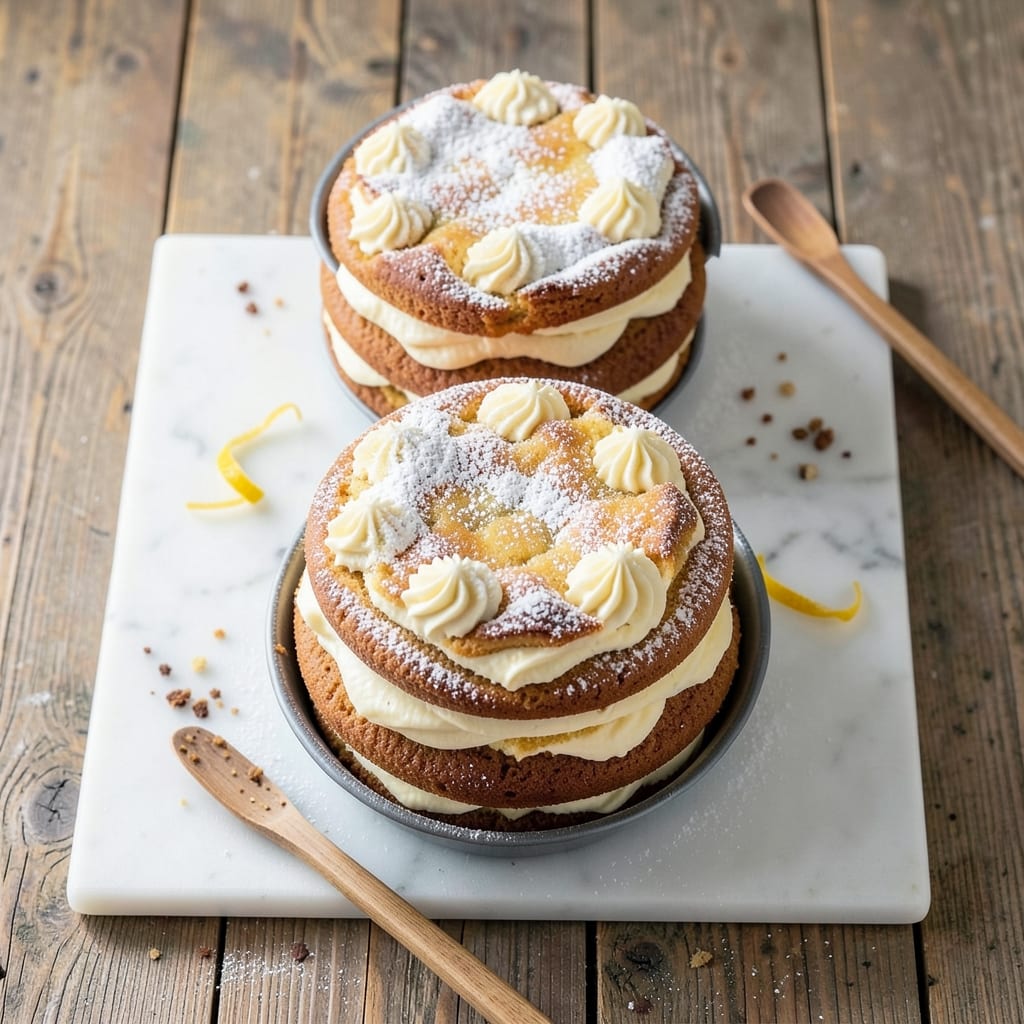
A 7-pound cake is the centerpiece of Southern gatherings—rich, moist layers cradled in rivers of vanilla frosting that disappear in one bite. This recipe delivers the perfect balance of tender crumb and buttery flavor, a tradition that’s been passed down through generations. The secret lies in precise measurements and gentle baking, ensuring every slice stays fresh for days. This classic dessert starts with a simple yet foolproof batter—flour, sugar, eggs, and butter combined to create ultra-moist layers. Baked at 325°F for 45-50 minutes, the cake emerges golden and perfectly set, ready for its signature frosting. The frosting, a creamy vanilla dream, is spread generously between layers and swirled on top for that iconic look. What sets this cake apart is its ability to stay tender, not dry, even after hours. The butter content keeps it rich, while the sugar ensures just the right sweetness without overpowering. It’s the kind of dessert that feels like a hug—comforting, indulgent, and impossible to resist. Whether you’re baking for a family reunion or a quiet Sunday afternoon, this 7-pound cake delivers restaurant-quality results at home. Let’s get started on creating a masterpiece that’ll have everyone asking for seconds.
Ingredients for 7 pound cake
Twelve ingredients transform into a legendary Southern dessert—moist layers and velvety frosting.
| Ingredient | Amount | Notes |
|---|---|---|
| All-Purpose Flour 🌾 | 7 cups | Sifted for even texture |
| Granulated Sugar 🍚 | 4 cups | Superfine preferred for smoothness |
| Unsalted Butter 🧈 | 3 ½ cups | Cold, cubed, room temperature |
| Large Eggs 🥚 | 8 whole | Room temperature for even baking |
| Whole Milk 🥛 | 1 ½ cups | Room temperature for creamy batter |
| Vanilla Extract 🍃 | 2 tbsp | Pure Madagascar bourbon preferred |
| Baking Powder 🧂 | 2 tbsp | Aluminum-free for tender crumb |
| Salt 🧂 | ½ tsp | Diamond Crystal kosher preferred |
| Vegetable Oil 🫒 | 1 cup | Light, neutral flavor |
| Vanilla Bean Paste 🍃 | 1 tbsp | For authentic vanilla flavor |
| Powdered Sugar 🍚 | 8 cups | For frosting, sifted smooth |
| Heavy Whipping Cream 🥛 | 3 cups | Cold, full-fat for stability |
| Vanilla Bean Seeds 🍃 | 1 whole | Scraped from quality vanilla bean |
The butter and eggs form the cake's soul—use high-quality, unsalted butter like Land O'Lakes or Plugrá for optimal flavor. Room-temperature eggs prevent lumps, and superfine sugar dissolves smoothly for ultra-tender crumb. The vanilla extract should be pure Madagascar bourbon—imitation extracts lack depth. For the frosting, heavy whipping cream from Organic Valley yields the creamiest texture, while powdered sugar should be sifted to avoid graininess. Pre-sift your flour and baking powder to eliminate air pockets, ensuring even layers.
No vanilla bean paste? Double the vanilla extract for comparable flavor intensity. Substitute vegetable oil with melted coconut oil for a dairy-free option, though texture may vary slightly. For a lighter cake, replace half the butter with applesauce, though richness will decrease. The frosting can be made 24 hours ahead—store in an airtight container in the fridge. If your powdered sugar clumps, sift it through a fine-mesh sieve before whipping. For a richer frosting, add 2 tbsp melted butter to the powdered sugar mixture before adding cream.
Store the cake in an airtight container at room temperature for up to 3 days or refrigerate for up to 1 week. The frosting can be refreshed by re-whipping with a splash of milk if it softens. For long-term storage, freeze the fully assembled cake for up to 3 months—thaw at room temperature before serving. To revive stale cake, warm slices in a 300°F oven for 5-10 minutes with a damp paper towel. The frosting freezes beautifully—portion into containers before freezing for easy reuse.
Why You'll Love This Recipe
- No Mixer Needed: I swear by this recipe when I’m too lazy to pull out the stand mixer—just cream butter and sugar by hand until it’s light and fluffy. The eggs and milk fold right in without a hitch, and honestly? The result is just as rich as anything you’d make with fancy equipment.
- Butter-Sugar Magic: That creamed butter and sugar combo? It’s the secret weapon here. The texture is ridiculously tender, with a subtle crumb that melts in your mouth. I’ll be real: I’ve tried cutting corners with oil, but nothing beats the real deal.
- Bakes for Days: One pan, endless possibilities. Serve it warm with tea, slice it cold for breakfast, or stash half in the freezer for lazy mornings. My kids even beg for it as a snack—yes, really—because that sugar-butter balance is just that good.
- Pantry Staple Power: Five ingredients, zero weird substitutes. You’re probably already looking at these while reading this. No specialty flours, no hard-to-find extracts—just flour, sugar, butter, eggs, and milk. Budget-friendly? Absolutely. Reliable? You bet.
Step-by-step instructions for 7-Pound cake with vanilla frosting rivers
Follow this precise method for layers that stay moist for days and frosting that cascades beautifully.
Prepare the Cake Batter with Precision
Preheat your oven to 350°F and grease three 9-inch round cake pans with vegetable oil, then line the bottoms with parchment paper. Sift together the 7 cups all-purpose flour, 2 tbsp baking powder, and 0.5 tsp salt in a large bowl. Set aside—this dry mixture needs to stay light and airy.
In a separate large bowl, cream together the 3.5 cups unsalted butter and 4 cups granulated sugar on medium speed until light and fluffy, about 5-7 minutes. The mixture should nearly triple in volume and become pale. Scrape down the sides of the bowl as needed to ensure even mixing. This step creates the air pockets that make the cake ultra-moist.
Add the 8 whole large eggs, one at a time, mixing well after each addition. Then stir in the 1.5 cups whole milk, 2 tbsp vanilla extract, and 1 tbsp vanilla bean paste. Scrape the bowl again to combine completely. With the mixer on low speed, gradually add the dry ingredients to the wet, mixing just until combined—do not overmix. The batter should be smooth and slightly thick.
Bake the Layers to Perfect Doneness
Divide the batter evenly among the prepared pans, filling each about two-thirds full. Tap the pans gently on the counter to release any air bubbles. Bake for 25-30 minutes, or until a toothpick inserted into the center comes out clean. Rotate the pans halfway through baking for even heat distribution.
Here's the thing—don't overbake. The cake will continue cooking slightly as it cools. You want the layers to be just set but still tender. If the top browns too quickly, tent the pans with foil. Once done, remove from the oven and let cool in the pans for 10 minutes before transferring to a wire rack to cool completely. This gradual cooling prevents cracking.
Create the Signature Vanilla Frosting
In a large mixing bowl, combine the 8 cups powdered sugar and 3 cups heavy whipping cream. Beat with an electric mixer on medium speed until smooth and creamy, about 3-4 minutes. The frosting should be thick but still pipeable. If needed, add a splash of milk to adjust consistency.
Scrape the seeds from the 1 whole vanilla bean and add them to the frosting along with the remaining 1 tbsp vanilla bean paste. Mix well to distribute the vanilla flavor evenly. The frosting should be fragrant and smooth, with no graininess. Taste and adjust sweetness if needed—some vanilla bean pastes can be quite strong.
Assemble and Decorate with Frosting Rivers
Once the cake layers are completely cool, level the tops if necessary. Place the first layer on a cake stand or plate, then spread a thin layer of frosting on top. This "crumb coat" prevents crumbs from getting into the final frosting. Place the second layer on top and repeat the process. Finally, place the third layer on top and spread a thin layer of frosting over the entire cake to create a smooth base.
For the signature frosting rivers, pipe a generous border of frosting around the edge of the cake using a piping bag fitted with a star tip. Then, pipe vertical lines of frosting from the top to the bottom, allowing them to cascade naturally. Use a small offset spatula to smooth the frosting and create clean lines. Chill the cake in the refrigerator for 30 minutes before serving to set the frosting perfectly.
Pro Tips For Making 7 Pound Cake
- Check Butter Temperature: I learned this the hard way—cold butter makes for a dense, heavy cake. Take that block of unsalted butter out of the fridge 30 minutes before creaming it with sugar. Room temperature is key; it should dent slightly when pressed but not be greasy. (Yes, even if you're impatient like me.)
- Weigh Your Flour: Scooping flour straight from the bag packs it down, and that’s how you end up with a cake that’s more brick than dessert. Use a kitchen scale for precision—7 pounds of cake demands accuracy. If you’re measuring by cups, spoon the flour into the measuring cup and level it off with a knife. No shaking the bowl.
- Bake Until Internal Temp Hits 205°F: That cake might look done at 160°F, but pull it out too early and it’ll collapse as it cools. Insert a thermometer into the center—the moment it reads 205°F, you’re golden. Let it cool in the pan for 15 minutes before transferring to a wire rack. (Your future self will thank you.)
- Sift Dry Ingredients Together: Flour, baking powder, and salt love to clump, and clumps mean uneven texture. Sift the dry ingredients into a bowl first, then whisk them lightly—this cuts down on lumps and ensures even distribution. Skip this, and you’ll end up with pockets of dry flour in your cake. (I know, I know, but trust the process.)
Troubleshooting your 7 pound cake
Dense Layers
If your cake turns out dense instead of light and airy, it’s likely due to overmixing the batter. Mix the dry ingredients into the wet just until combined—no need to overwork it. Also, ensure your butter and eggs are at room temperature; cold ingredients can prevent proper emulsification. For extra moisture, add 1 tbsp of milk or melted butter to the batter if it seems too thick. 🌟
Cracked Top
Cracks often appear when the cake cools too quickly or if the oven temperature fluctuates. Always let the cake cool in the pans for 10 minutes before transferring to a wire rack. To prevent this, avoid opening the oven door frequently during baking. If cracks form, they can be hidden under the frosting—just pipe a generous layer over them.
Dry Texture
A dry cake usually means overbaking or using too much flour. Pull the cake out of the oven as soon as a toothpick comes out clean—it’ll continue cooking slightly as it cools. To revive dry cake, brush the layers with a simple syrup (equal parts sugar and water, heated until dissolved) before frosting. For future bakes, measure flour by weight (1 cup = 120g) instead of volume to avoid overpacking.
Frosting Too Soft
If your frosting isn’t holding its shape, it might be too warm or not whipped enough. Chill the mixing bowl and beaters in the freezer for 10 minutes before whipping, and ensure your heavy cream is very cold. For extra stability, add 1 tbsp of powdered sugar at a time until the frosting reaches the right consistency. If it’s still too soft, pipe a thin crumb coat and chill the cake for 30-45 minutes before adding the final layer.
Uneven Layers
Uneven layers often happen if the batter isn’t divided evenly or if the pans aren’t level. Use a kitchen scale to divide the batter precisely, and tap the pans gently on the counter to release air bubbles. If one layer is thicker, trim it slightly with a serrated knife before assembling. For a professional finish, use a leveling tool or a long serrated knife to create even tops.
Frosting Separates
Frosting that separates usually means it wasn’t whipped long enough or the powdered sugar wasn’t sifted. Whip the frosting for at least 3-4 minutes until smooth and creamy. If it starts to separate after chilling, simply re-whip it with a splash of milk to restore its consistency. For extra insurance, sift the powdered sugar through a fine-mesh sieve before mixing to avoid lumps.
Nutrition facts
Frequently asked questions about 7-Pound cake
Why is this called a 7-pound cake?
The name comes from the total weight of the batter before baking—about 7 pounds when using all ingredients. This massive size creates three generous 9-inch layers, perfect for feeding a crowd. The traditional Southern dessert is designed to serve 12-15 people with thick slices, making it ideal for celebrations.
Can I make this cake in a smaller pan?
Yes! For a 2-layer version, divide the batter between two 9-inch pans and adjust baking time to 25-30 minutes. For a single 10-inch layer, use the full batter in one pan but increase baking time to 35-40 minutes. The frosting quantity will need to be halved for smaller cakes.
How do I keep the cake moist for days?
The secret is the butter-to-flour ratio and proper storage. Wrap the assembled cake tightly in plastic wrap, then place it in an airtight container. Store at room temperature for up to 3 days—the frosting helps lock in moisture. For longer storage, refrigerate for up to 1 week or freeze for 3 months. Always bring frozen cake to room temperature before serving.
What's the best way to level the cake layers?
Use a serrated knife or a cake leveler for clean cuts. Place the cake on a plate, mark the highest points with a pencil, then trim carefully. For extra precision, use a laser level or a straightedge to guide your knife. Leveling ensures even frosting distribution and a professional finish. Never force the knife—let gravity do the work.
Can I substitute butter with oil?
You can replace half the butter with vegetable oil for a lighter texture, but expect slightly less richness. For a 1:1 substitution, reduce the sugar by 1/4 cup to balance sweetness. Oil-based cakes tend to be moister but less flavorful. If substituting, increase vanilla extract to 3 tbsp to compensate for lost depth.