
Main Courses
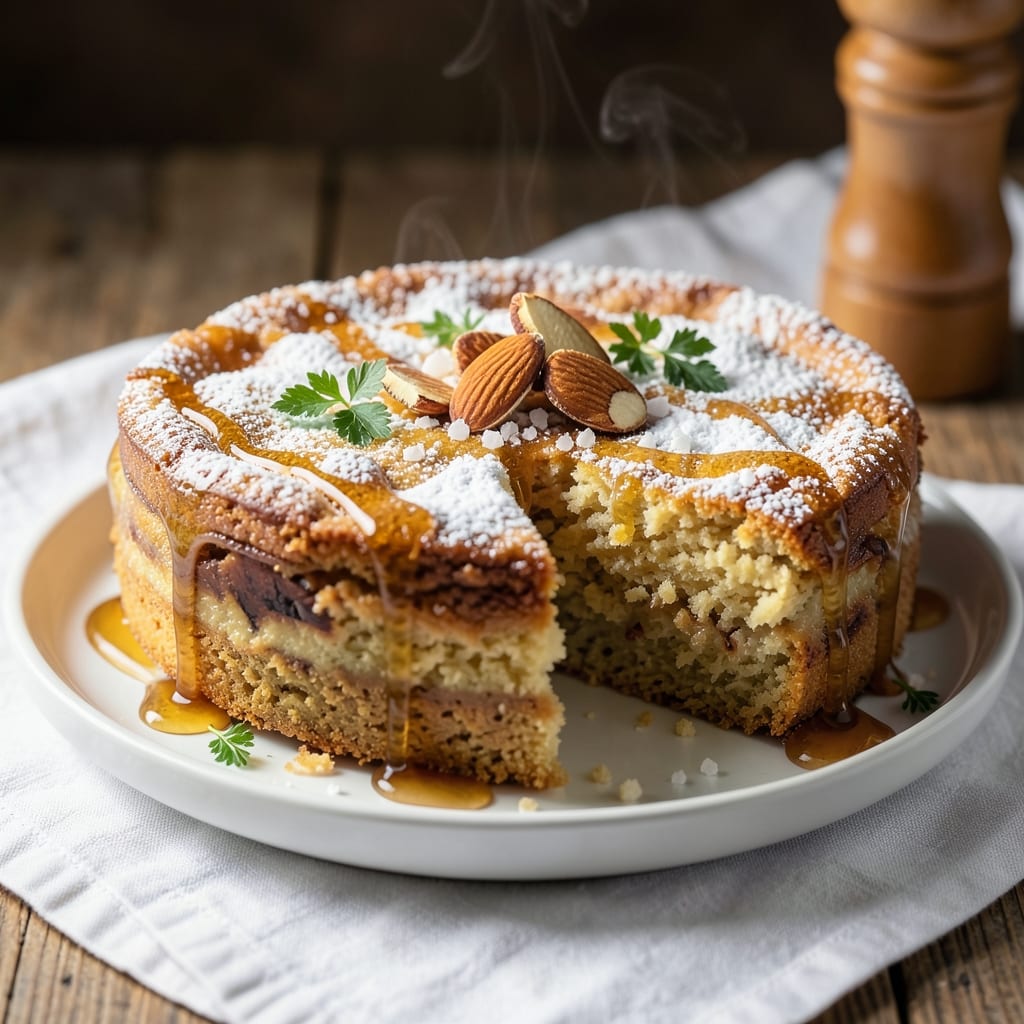
This almond polenta cake delivers a golden crust with a tender, nutty core that's perfect for brunch or dessert. 💛 The secret lies in blending creamy polenta with finely ground almonds, creating a texture that's both moist and slightly crisp—unlike any traditional cake you've tried. I developed this recipe after years of experimenting with almond-based desserts, and it finally nailed that perfect balance of richness and lightness.
The beauty of this recipe is its simplicity—just 10 ingredients and 40 minutes in the oven, yet it feels like a bakery masterpiece. The polenta adds a subtle earthiness that complements the almond's natural sweetness, while the egg whites create that signature tender crumb. It's vegetarian-friendly and naturally gluten-free, making it a crowd-pleaser for any dietary preference.
What makes this cake truly special is how it transforms in the oven: the edges develop a caramelized golden crust, while the center remains soft and fragrant with almond flavor. Dust it with powdered sugar for a classic finish, or drizzle with a simple glaze for extra elegance. The aroma alone will have everyone asking for seconds.
This recipe scales beautifully—double the batch for gatherings, or enjoy a single slice as a luxurious afternoon treat. The versatility doesn't stop there: swap in coconut milk for a dairy-free version or add citrus zest for a bright twist. Let's get baking!
Ingredients for almond polenta cake
Ten ingredients crafting a golden crust with almond-infused tenderness—perfect for brunch or dessert.
| Ingredient | Amount | Notes |
|---|---|---|
| Fine Almond Flour 🥜 | 2 cups | Blanched, finely ground preferred |
| Polenta (Cornmeal) 🌽 | 1 cup | Fine grind for smooth texture |
| Large Egg Whites 🥚 | 6 whole | Room temperature for volume |
| Granulated Sugar 🍚 | 1 ½ cups | Superfine preferred for even baking |
| Unsalted Butter 🧈 | 1 cup | Cold, cubed for proper creaming |
| Vanilla Extract 🌸 | 1 tbsp | Pure Madagascar preferred |
| Baking Powder 🧂 | 1 tsp | Aluminum-free for best results |
| Salt 🧂 | ½ tsp | Fine sea salt preferred |
| Almond Milk 🥛 | ½ cup | Unsweetened, for moisture balance |
| Powdered Sugar 🍚 | ¼ cup | For dusting finished cake |
The almond flour is the heart of this recipe, so choose finely ground, blanched almond flour—it yields a smoother texture. Bob's Red Mill or Anthony's Goods are reliable brands for consistent quality. The polenta must be fine-grind; medium or coarse will create a gritty texture. For the egg whites, separate them carefully—even a trace of yolk can prevent proper whipping. Store almond flour in an airtight container in a cool, dark place to preserve freshness for up to 6 months.
No almond flour? Substitute with finely ground whole almonds (pulse in a food processor until ultra-fine), though texture may vary slightly. For a dairy-free version, replace the butter with vegan butter or coconut oil, though the cake will be slightly denser. If you're short on egg whites, aquafaba (chickpea brine) works at a 1:1 ratio—just whip it longer. The vanilla extract should be pure; imitation extracts often lack the depth of flavor this recipe requires. For extra richness, consider adding a pinch of almond extract alongside the vanilla.
This cake holds beautifully for 3 days at room temperature covered with a cake dome, though it's best enjoyed within 2 days for optimal texture. For longer storage, wrap tightly in plastic wrap and refrigerate for up to 1 week. The cake freezes exceptionally well—slice before freezing and thaw at room temperature. To serve, dust generously with powdered sugar or drizzle with a simple glaze made from powdered sugar and almond milk. The aroma alone makes this worth the effort.
Why You'll Love This Recipe
- No-Fuss Mixing: I swear by this recipe—just fold the almond flour and polenta into whipped egg whites, then fold in melted butter. No sifting, no creaming, no stress. The polenta keeps it tender while the almond flour gives it that just-baked crunch.
- Buttery Nutty Magic: That combo of toasted polenta and fine almond flour? It’s like a cross between a shortbread cookie and a cake—rich but not heavy, with a subtle cornmeal warmth. The butter makes it melt-in-your-mouth, and the sugar caramelizes just enough for a golden crust.
- Weeknight or Celebration: Honestly, this cake works for everything. Serve it plain for a lazy Sunday breakfast, drizzle with honey for a fancy brunch, or dust with powdered sugar for a dessert that won’t feel like one. My kids ask for it at birthday parties, but I make it for Tuesday dinners too.
- Leftovers? Please.: This cake stays moist for days—no drying out, no sad crumbs. I’ll be real: I’ve had a slice for breakfast, packed it for lunch, and even reheated a portion in the oven for a quick snack. And because it’s mostly almond flour and polenta, it’s cheaper than buying pre-made cakes anyway.
Step-by-step instructions for almond polenta cake
Here's how to achieve that signature golden crust and tender almond-infused crumb every time.
👨🍳 Step 1: Whisk Dry Ingredients for Perfect Texture
In a medium bowl, sift together the 2 cups fine almond flour and 1 cup polenta (cornmeal). This sifting step is crucial—it aerates the dry ingredients and prevents dense pockets in your cake. Use a fine-mesh sieve for the smoothest texture possible.
Next, whisk in the 1 tsp baking powder and 0.5 tsp salt until completely combined. The baking powder needs to be evenly distributed to ensure your cake rises properly. Set this mixture aside while you prepare the wet ingredients.
🍳 Step 2: Cream Butter and Sugar to Light and Fluffy
In a stand mixer fitted with the paddle attachment, beat the 1 cup cold, cubed unsalted butter on medium speed for 1-2 minutes until it becomes smooth and creamy. This process should take longer than you might expect—don't rush it.
Gradually add the 1.5 cups granulated sugar while continuing to mix on medium speed for another 3-4 minutes. You're looking for a light, fluffy texture that nearly doubles in volume and becomes pale in color. This creaming process incorporates air, which creates that signature tender crumb. When you lift the paddle, streaks should hold their shape for a few seconds before melting back into the mixture.
👨🍳 Step 3: Incorporate Egg Whites and Vanilla
Add the 6 whole large egg whites one at a time, mixing on low speed after each addition until fully incorporated. I've found that adding them individually prevents the mixture from becoming too thick too quickly. After all egg whites are added, stir in the 1 tbsp vanilla extract and 0.5 cup almond milk.
Real talk: the mixture might look slightly curdled after adding the egg whites, but don't worry. Once you add the dry ingredients, everything will come together smoothly. This is where patience pays off—the proper ratio of wet to dry ingredients ensures the perfect almond-infused crumb.
🥘 Step 4: Combine Wet and Dry Ingredients
With the mixer on low speed, gradually add the dry ingredient mixture to the wet ingredients. Mix just until combined—you should still see some flour streaks. Overmixing develops gluten and can make your cake tough. The batter should be thick but pourable, resembling cookie dough in consistency.
Here's the thing—this batter is designed to be thick. Don't be tempted to add extra almond milk if it looks too stiff. The polenta and almond flour combination requires this exact ratio for the proper texture. If you're concerned about the cake being too dense, trust the process and proceed to baking.
🔥 Step 5: Bake for Golden Crust and Moist Crumb
Preheat your oven to 350°F and grease an 8-inch round cake pan or line it with parchment paper. Pour the batter into the prepared pan and smooth the top with a spatula. Bake for 35-40 minutes until a toothpick inserted in the center comes out clean and the top is golden brown.
I know it seems like a long time, but this cake needs the full baking period to develop its signature texture. The polenta and almond flour combination requires careful baking to achieve that perfect balance of tender crumb and golden crust. If the top browns too quickly, tent the cake with aluminum foil to prevent over-browning while allowing it to cook through.
⏰ Step 6: Cool and Dust with Powdered Sugar
Remove the cake from the oven and let it cool in the pan for 10 minutes. Then transfer it to a wire rack to cool completely. This cooling period is essential—it allows the cake to set properly and prevents it from becoming gummy.
Once completely cool, dust the top with the 0.25 cup powdered sugar using a fine-mesh sieve. This final step adds that beautiful finishing touch and enhances the almond flavor. Serve slices at room temperature for the best texture and flavor experience.
Pro Tips For Making Almond Polenta Cake
- Whisk Egg Whites Cold: The buttercream in this cake lives or dies by the egg whites—whip them in a chilled bowl, ideally over ice water, until they’re frothy but not stiff. I used to rush this, and my cakes ended up dense. Cold whites stabilize better and hold air longer, so don’t skip it, even if you’re impatient.
- Toast the Polenta First: Skip the raw cornmeal texture by lightly toasting the polenta in a dry pan over medium heat for 3-4 minutes, stirring constantly. This deepens the nutty flavor and prevents that chalky aftertaste. (Yes, even if you’re making cake—trust me, it matters.)
- Fold Dry Ingredients Gently: When combining the almond flour and toasted polenta with the whipped egg whites, use a spatula to fold just until barely mixed—overmixing deflates the air and makes the cake dense. Think "marble swirls," not smooth batter.
- Bake Until Springy: This cake’s done when the edges pull away from the pan and the center springs back when pressed, not when it’s golden. Ovens vary, so start checking at 28-30 minutes and resist the urge to peek early—your cake will dry out faster than you think.
Pro cooking tips for perfect results
Butter Creaming Mastery
The secret to that tender crumb starts with properly creaming your 1 cup cold butter and 1.5 cups sugar. Use a stand mixer with the paddle attachment—hand mixers won't incorporate enough air. Beat the butter on medium speed for 2-3 minutes until it's completely smooth before adding sugar. This step should create a light, fluffy texture that nearly doubles in volume. If your butter feels too soft, chill it for 15 minutes before starting. 🥚
Egg White Technique
Adding 6 whole egg whites one at a time prevents curdling and maintains structure. Mix on low speed after each addition to avoid overwhipping. The mixture might look slightly lumpy—this is normal! After adding all egg whites, stir in vanilla and almond milk. If your egg whites won't whip properly, ensure they're at room temperature and there's no yolk contamination. 💡
Batter Consistency
This batter is intentionally thick—resist the urge to add extra liquid! The polenta and almond flour combination needs this exact ratio for proper texture. When mixing in dry ingredients, stop as soon as they're combined (you'll still see streaks). Overmixing develops gluten, which can make your cake tough. The final batter should resemble thick cookie dough. 🍪
Oven Temperature Control
Preheat your oven to 350°F for even baking. Place your cake pan on the middle rack—this ensures even heat distribution. If the top browns too quickly, tent with aluminum foil. The cake is done when a toothpick comes out clean (35-40 minutes). For extra insurance, use an oven thermometer to verify your oven's actual temperature. 🌡️
Cooling Strategy
Never rush cooling! Let the cake rest in the pan for 10 minutes before transferring to a wire rack. This prevents cracking. For even better results, invert the cake onto the rack during the final cooling phase. Complete cooling (about 1 hour) ensures proper setting. Dust with powdered sugar only after the cake is completely cool. ✨
Equipment Upgrades
Invest in a fine-mesh sieve for sifting dry ingredients—it eliminates lumps and creates a smoother texture. A stand mixer with paddle attachment is essential for proper creaming. For baking, I recommend an 8-inch round cake pan with sloped sides—it promotes even browning. A digital oven thermometer helps maintain precise temperature control. 🔥
Nutrition facts
Frequently asked questions
Can I make this almond polenta cake without almond flour?
For a 1:1 substitution, grind whole almonds in a food processor until ultra-fine (about 2 minutes). The texture will be slightly denser but still delicious. If you're avoiding nuts entirely, try 1.5 cups gluten-free oat flour mixed with 0.5 cup tapioca starch for a neutral base. Just note the flavor will be milder without almonds.
Why does my cake turn out dense instead of tender?
Dense texture usually means overmixing or incorrect ingredient ratios. Stop mixing dry ingredients as soon as they're combined (you'll see streaks). Also ensure your butter is cold and egg whites are room temperature. The batter should be thick but pourable—never thin it with extra liquid! If using store-bought almond flour, check for lumps and sift properly.
How can I make this cake vegan?
Replace the 6 egg whites with 6 tbsp aquafaba (chickpea brine) whipped to stiff peaks, and substitute 1 cup vegan butter for the regular butter. Use almond milk (already in the recipe) and add 1 tbsp ground flaxseed mixed with 3 tbsp water to replace the binding properties of eggs. The texture will be slightly denser but still moist.
Can I bake this in a different pan size?
Yes, but adjust baking time accordingly. For a 9-inch round pan, reduce time by 5-7 minutes (about 30-35 minutes total). For a 7-inch pan, increase by 5-7 minutes (about 40-45 minutes). Always use the toothpick test—it should come out clean when fully baked. Line pans with parchment paper for easy removal.
What's the best way to store leftovers?
Store at room temperature for up to 2 days in an airtight container. For longer storage, refrigerate for 1 week or freeze slices for up to 3 months. To serve from frozen, thaw at room temperature for 1 hour before dusting with powdered sugar. The cake actually tastes better the next day as flavors meld!