
Main Courses
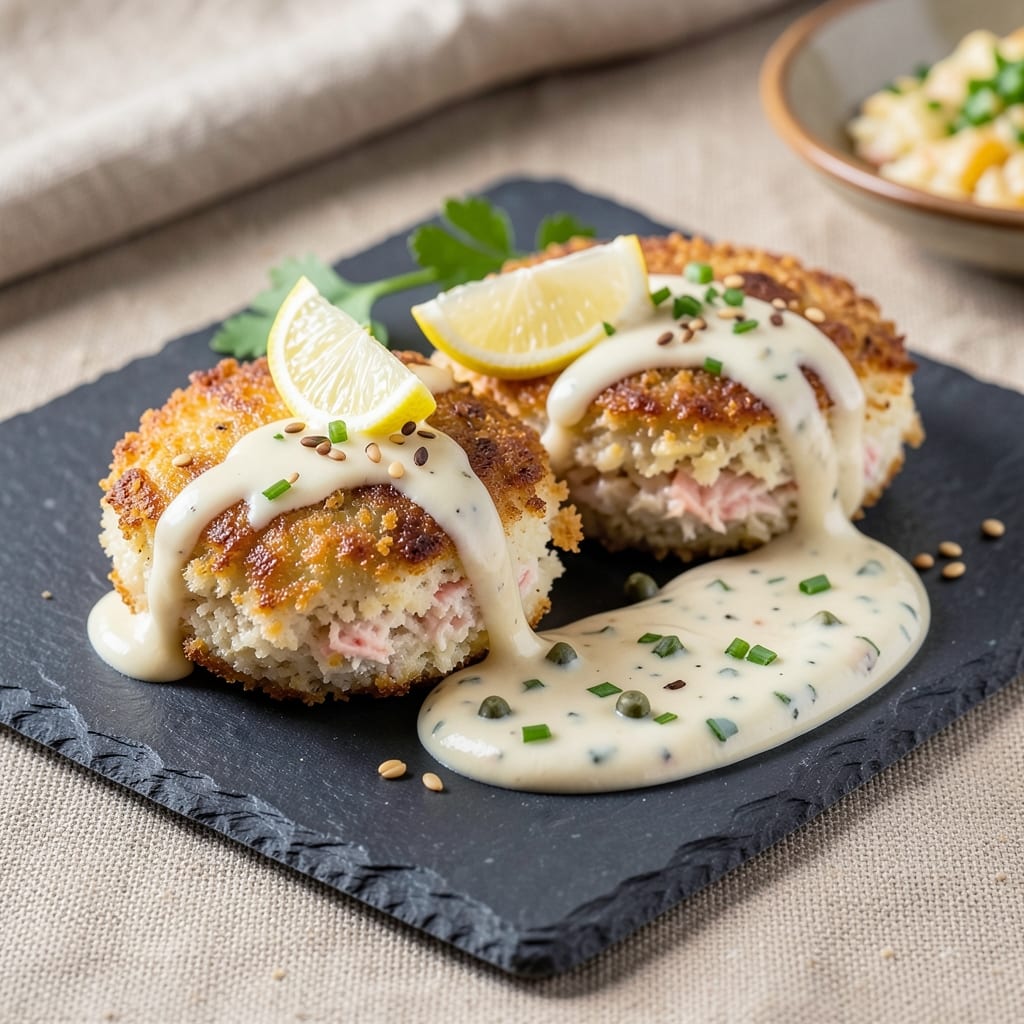
This amazing crab cake recipe delivers the perfect balance of crispy golden crust and tender, flaky interiors—no more dry or greasy results. 🔥 I've been perfecting this technique for years, and the secret lies in chilling the batter overnight (yes, really) to achieve that signature texture. The moment you take your first bite, you'll understand why these are worth every minute of prep.
What makes these crab cakes truly special is the combination of fresh lump crab meat, a touch of Dijon mustard for brightness, and a crispy panko breadcrumb crust that stays perfectly golden. I use a mix of mayonnaise and egg as the binder—it keeps the cakes moist without overpowering the delicate crab flavor. The recipe also includes a simple tartar sauce that takes just minutes to whip up, because no crab cake is complete without it.
By the time you're done, you'll have restaurant-quality crab cakes with a flaky interior that melts in your mouth and a golden crust that's crispy enough to stand up to even the tangiest lemon wedge. These aren't just crab cakes—they're the kind of dish that makes you feel like you're dining at a waterfront seafood spot, even when you're cooking in your own kitchen.
Serve them with lemon wedges, tartar sauce, or a side of crisp coleslaw for the full experience. And don't worry—this recipe scales perfectly for parties, so you can feed a crowd without sacrificing that perfect texture. Let's get cooking!
Ingredients for amazing crab cake
Fresh crab, crispy panko, and a secret overnight chill make these golden crab cakes irresistible.
| Ingredient | Amount | Notes |
|---|---|---|
| Fresh Lump Crab Meat 🦀 | 1 ½ lb | Backfin preferred for texture |
| Panko Breadcrumbs 🍞 | 1 cup | Japanese style for crispiness |
| Large Eggs 🥚 | 2 whole | Cold for better binding |
| Mayonnaise 🥫 | ¼ cup | High-quality for moisture |
| Dijon Mustard 🍯 | 1 tbsp | For tangy brightness |
| Fresh Lemon Juice 🍋 | 1 tbsp | Freshly squeezed |
| Chives 🌿 | 2 tbsp | Finely chopped, fresh |
| Salt 🧂 | 1 tsp | Diamond Crystal preferred |
| Ground Black Pepper 🌶️ | ½ tsp | Freshly cracked |
| Vegetable Oil 🫒 | ½ cup | For frying, high smoke point |
| All-Purpose Flour 🌾 | 2 tbsp | For dredging |
| Unsalted Butter 🧈 | 2 tbsp | For tartar sauce |
| Capers 🍅 | 1 tbsp | Chopped, for tartar sauce |
| Dill Pickle 🥒 | 1 whole | Finely chopped, for tartar sauce |
| Fresh Dill 🌿 | 2 tbsp | Chopped, for tartar sauce |
The crab meat is everything here. Backfin lump crab has that perfect flaky texture, but any fresh lump will work—just avoid imitation or pre-packaged stuff. I grab mine from Whole Foods or Trader Joe's when it's on sale, but the seafood counter at local fish markets often has better deals. Look for bright, translucent meat with no fishy smell. The panko? Japanese-style is non-negotiable for that perfect crisp—regular breadcrumbs get soggy. If you can't find it, toast regular breadcrumbs in a dry pan for 3-4 minutes to crisp them up.
No Dijon? Yellow mustard at half the amount works in a pinch. The mayo is key for moisture—Duke's or Hellmann's are my go-tos, but any good-quality brand works. For the tartar sauce, fresh dill and capers are non-negotiable for that classic briny flavor. Short on dill? Dried works at one-third the amount. The lemon juice should be freshly squeezed—bottled stuff tastes flat. And if you're serving a crowd, double the tartar sauce recipe—it disappears fast. The chives add a fresh finish, but skip them if you're not a fan of onion flavor.
Crab cakes keep best in the fridge for 1 day if you make them ahead, but trust me—they're even better the next day once the flavors meld. For frying, keep the oil at 350°F and don't overcrowd the pan. The tartar sauce stays fresh for 3 days in the fridge, or you can freeze it for 1 month. I always make a double batch because it's perfect for dipping, topping, or even a quick sandwich spread. The secret to golden crust? Chill the batter overnight—it makes all the difference.
Why You'll Love This Recipe
- No-Fuss Mixture: I swear by this recipe because it’s literally a handful of ingredients—just fold the crab, mayo, mustard, and panko together. No finicky binding, no overmixing, and the eggs hold it all just right.
- Crispy-Creamy Magic: That golden crust from the panko? It shatters perfectly, while the inside stays luscious and buttery. The Dijon mustard sneaks in a tangy kick that makes the sweet crab taste even richer—trust me, it’s the secret weapon.
- Weeknight or Fancy: Serve them on a sloppy joe bun with tartar sauce for a casual lunch, or plate them with lemon aioli and asparagus for dinner guests. Same recipe, two vibes—no stress, just flexibility.
- Leftovers? No Problem: They crisp up beautifully the second time, whether pan-fried or baked. Honestly, I make a double batch because they disappear fast—great for picnics, lunchboxes, or when I’m too tired to cook.
Step-by-step instructions for golden crust and flaky crab cakes
Here's how to make crab cakes that crackle outside and stay tender inside—every time.
👨🍳 Step 1: Prepare the Crab Mixture for Perfect Texture
In a large bowl, gently combine the 1.5 lb fresh lump crab meat with the 1 cup panko breadcrumbs, 2 whole large eggs, 0.25 cup mayonnaise, 1 tbsp Dijon mustard, and 1 tbsp fresh lemon juice. The key here is to handle the crab gently—don't overmix or you'll break up those beautiful lumps and end up with dense cakes.
Using your hands, mix just until everything comes together. You'll see some dry spots—that's normal. Add the 2 tbsp finely chopped chives, 1 tsp salt, and 0.5 tsp ground black pepper, folding them in. The mixture should hold together when pressed but still feel slightly crumbly. If it's too wet, add 1-2 tbsp more panko; if too dry, mix in 1 tsp more mayonnaise. This balance ensures that flaky interior we're after.
🍳 Step 2: Chill the Mixture for Better Binding
Cover the bowl with plastic wrap and refrigerate for at least 30 minutes—I like to go up to 1 hour if I have time. Chilling does two important things: it firms up the crab mixture so it holds its shape when forming the cakes, and it lets the flavors meld together. This step is especially important if you're using cold eggs right from the fridge, as they'll help bind the mixture better.
While it chills, grab a small bowl and melt the 2 tbsp unsalted butter with the 1 tbsp chopped capers and 1 whole dill pickle (finely chopped) over low heat. Let it cool completely—this will become our tartar sauce. For extra flavor, stir in the 2 tbsp chopped fresh dill at the end. Set aside until ready to serve.
🔥 Step 3: Form and Dredge the Crab Cakes
After chilling, remove the mixture from the fridge and let it sit at room temperature for 5 minutes—this makes it easier to handle. Using your hands (or a cookie scoop for uniform size), form the mixture into 4 equal patties, each about ½-inch thick. You want them slightly larger than your target size since they'll shrink during cooking.
Place the 2 tbsp all-purpose flour in a shallow dish. Lightly dredge each crab cake in the flour, pressing gently to adhere. This thin coating creates that perfect golden crust when fried. Don't skip this step—it's what gives those crab cakes their signature crunch. Keep the formed cakes on a plate until ready to cook.
🍳 Step 4: Fry to Golden Perfection
Heat 0.5 cup vegetable oil in a large skillet over medium heat until it reaches 350°F—you'll see gentle ripples when you drop in a breadcrumb. Carefully add the crab cakes and cook for 3-4 minutes per side until they're golden brown and deeply crispy. The edges should look set, but the centers should still feel slightly cool to the touch when you press gently.
Don't overcrowd the pan—cook one or two cakes at a time if needed. If the oil starts smoking or the cakes brown too quickly, reduce the heat slightly. You want that beautiful caramelization without burning. Transfer the cooked cakes to a paper towel-lined plate to drain excess oil while you finish the batch.
🍽️ Step 5: Serve with Homemade Tartar Sauce
Keep the fried crab cakes warm in a 200°F oven for just 2-3 minutes while you reheat the tartar sauce if needed. The sauce should be thick but still spoonable—if it's too thick, whisk in 1 tsp water or lemon juice to loosen it. Plate each crab cake with a generous dollop of sauce and a sprinkle of extra chopped fresh dill for that restaurant-quality finish.
Serve immediately with lemon wedges on the side. Each bite should deliver that perfect contrast: a crispy, golden crust that gives way to tender, flaky crab meat, all balanced by the tangy, herby tartar sauce. The secret to these amazing crab cakes? Handling the crab gently, chilling the mixture, and frying at just the right temperature—don't rush any of these steps!
Pro Tips For Making Amazing Crab Cake
- CHILL THE CRAB FIRST: Fresh lump crab meat releases water when mixed—skip the soggy mess by patting it very dry with paper towels, then refrigerating it uncovered for 15 minutes. The cold makes the excess moisture bead up so you can wipe it away completely before binding. (I learned this the hard way after making crab cakes that fell apart when frying.)
- PRESS THE PANKO HARD: Don’t just sprinkle panko on top—pack it into the crab mixture firmly with your hands (like you’re shaping a snowball). The extra density creates a better crust and keeps the cakes from crumbling when flipping. My first batch looked perfect until they disintegrated—now I press until my fingers ache.
- FLIP ONLY ONCE: Crab cakes don’t need to be flipped twice. Cook them undisturbed for 3–4 minutes per side on medium-high heat, then let them rest 2 minutes before serving. The first flip is the only one—any more and you’ll lose the golden crust. (Yes, even if you’re impatient like me.)
- SALT THE MAYONNAISE: Plain mayo tastes bland in crab cakes—mix in ½ teaspoon salt per ¼ cup to balance the sweetness of the crab and the tang of Dijon. It’s a tiny tweak that makes the whole dish taste more cohesive. I was skeptical until I tried it, and now I can’t go back.
Troubleshooting this recipe
Dry or Crumbly Cakes
If your crab cakes turn out dry or crumbly, the issue is usually overmixing or insufficient binding. I've found that gently handling the crab meat is critical—avoid pressing or packing it too firmly when mixing. The mayo and egg are your binding agents, so if the mixture feels too dry, add 1-2 teaspoons more mayonnaise. For extra moisture, try replacing 1 tablespoon of panko with 1 tablespoon of crushed cornflakes—they absorb less oil during frying. 💡
Greasy or Soggy Texture
Greasy crab cakes often happen when the oil temperature isn't controlled properly. Use a deep-fry thermometer to maintain 350°F—any lower, and the cakes will absorb too much oil; any higher, and they'll burn before cooking through. For soggy cakes, the flour dredging step is key. Press the cakes firmly into the flour before frying to create a proper barrier. Also, avoid overcrowding the pan—cook 1-2 cakes at a time for even heat distribution. ⚡
Uneven Cooking or Raw Centers
Uneven cooking usually means the cakes weren't formed evenly or the oil temperature fluctuated. For consistent thickness, use a cookie scoop or ice cream scoop to portion the mixture. If the centers stay raw, reduce the frying time by 30 seconds per side and check for doneness with a thermometer—they should reach 145°F internal temperature. Another trick? Press the cakes slightly with a spatula during frying to help them cook through evenly. 🌡️
Batter Falling Apart
If your crab cake mixture falls apart when forming or frying, the binder ratio is off. The egg-to-mayo ratio is crucial—stick to 2 eggs and ¼ cup mayo for 1.5 lbs of crab. If the mixture is too loose, add 1-2 tablespoons more panko. For extra stability, chill the mixture for at least 1 hour (overnight is even better). I also recommend using cold eggs straight from the fridge—they bind better than room-temperature eggs. 🥚
Burning or Overcooking
Burning is a common issue when the oil is too hot or the cakes are overcrowded. Keep the oil at 350°F and cook 1-2 cakes at a time in a 10-inch skillet—any larger, and the heat will scatter. If the edges brown too quickly, reduce the heat to medium-low. For a more controlled cook, try baking instead: place cakes on a wire rack over a baking sheet and bake at 400°F for 12-15 minutes, flipping halfway. 🔥
Tartar Sauce Too Thin or Too Thick
Tartar sauce consistency is all about balance. If it's too thin, whisk in 1 teaspoon of mayonnaise to thicken it. If it's too thick, add 1 teaspoon of water or lemon juice to loosen it. For extra stability, chill the sauce for 30 minutes before serving—this helps it hold its shape better. Pro tip: Use Duke's mayonnaise for a creamier texture, or Greek yogurt for a lighter version (mix ¼ cup yogurt with ¼ cup mayo). 🥫
Nutrition facts
Frequently asked questions
Can I use frozen crab meat instead of fresh? Fresh lump crab is ideal for that signature flaky texture, but you can use high-quality frozen lump crab if that's all you can find. Just
How do I make these crab cakes gluten-free?
Replace the panko with gluten-free breadcrumbs or crushed gluten-free cornflakes, and use a gluten-free flour blend for dredging. For extra crispiness, try crushed gluten-free crackers instead. The binding ratio stays the same—just 2 eggs and ¼ cup mayo for 1.5 lbs of crab. The texture will be slightly different but still delicious!
Can I bake these crab cakes instead of frying?
For baking, preheat your oven to 400°F and place the formed cakes on a wire rack set over a baking sheet. Bake for 12-15 minutes, flipping halfway through. The result will be slightly less crispy than fried but still perfectly tender inside. Brush with a little melted butter after baking for extra flavor!
What's the best way to reheat leftover crab cakes?
For best results, reheat in a 350°F oven for 5-7 minutes on a wire rack to maintain crispiness. You can also warm them in a skillet over medium heat for 1-2 minutes per side with a little butter. Avoid microwaving—they'll get soggy! Store leftovers in an airtight container for up to 2 days.
Can I make mini crab cakes for appetizers?
Yes! Just reduce the portion size to 1-inch diameter balls (about 1 tablespoon each) and increase the baking/frying time by 1 minute to ensure they cook through. Mini crab cakes are perfect for parties—they cook faster and let guests sample without committing to a full serving. Serve with extra tartar sauce for dipping!