
Desserts
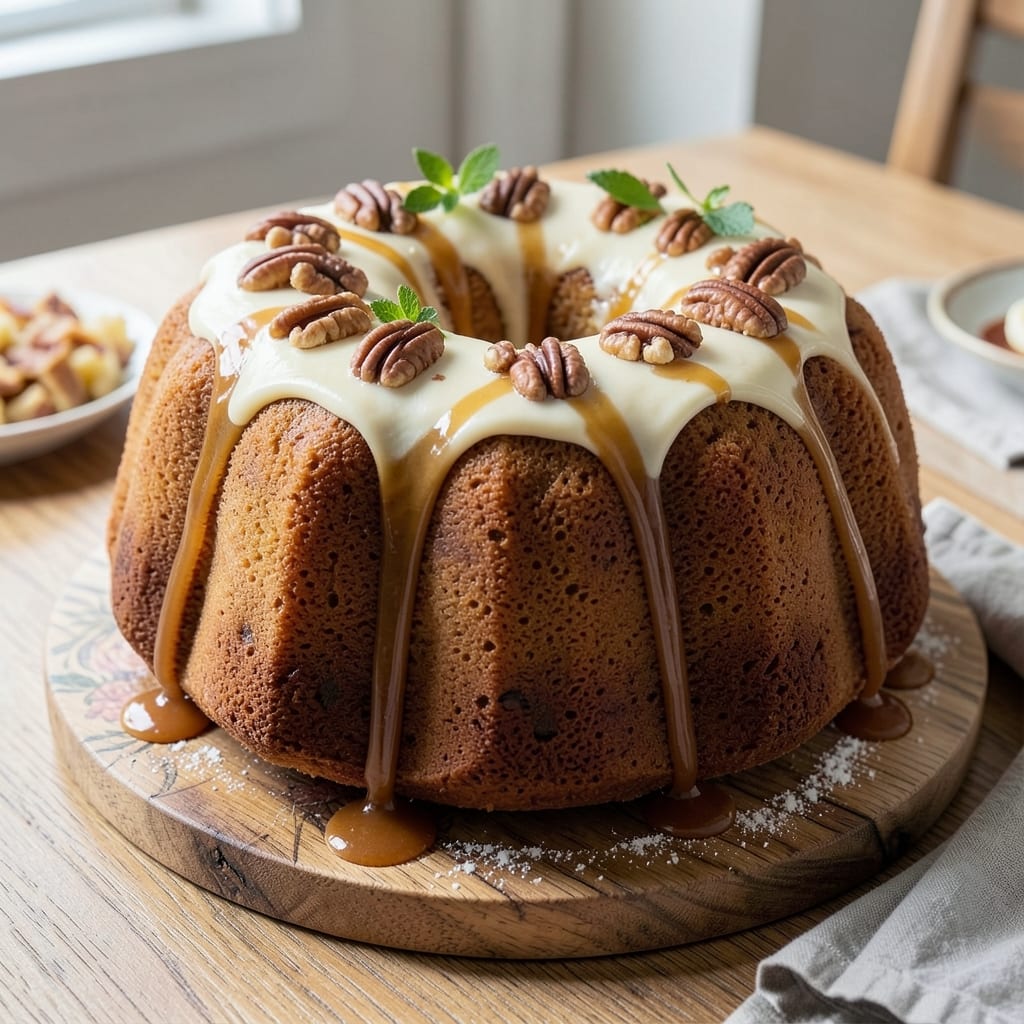
This 10-inch bundt cake recipe delivers the perfect balance of crispy top and tender crumb, with dramatic vanilla buttercream rivers that make every slice a showstopper. The key lies in precise baking techniques that create that coveted contrast—no dry cake here. I’ve perfected this recipe over years of testing, ensuring the cake stays moist while developing that irresistible caramelized crust.
The secret to the crispy top starts with a hot oven and a well-greased pan. You’ll use a simple vanilla cake batter that’s rich enough to hold its structure but light enough to create those signature tender layers. The buttercream rivers aren’t just decorative—they add moisture and a velvety contrast that elevates every bite. This recipe is designed for reliability, so even beginners can achieve bakery-quality results.
What you’ll end up with is a cake that’s golden and crispy at the edges, with a tender yet sturdy crumb that holds its shape when sliced. The vanilla buttercream rivers melt slightly when cut, creating pockets of sweetness that balance the cake’s subtle vanilla flavor. It’s the kind of dessert that looks impressive enough for special occasions but simple enough for a weeknight treat.
Whether you’re serving it at a brunch, holiday gathering, or just indulging yourself, this bundt cake delivers on both presentation and taste. The recipe includes tips for adjusting sweetness, ensuring the perfect rise, and troubleshooting common baking challenges. Let’s get baking!
Ingredients for 10 inch bundt cake
Twelve ingredients, one masterpiece: the perfect bundt cake with crispy top and velvety rivers.
| Ingredient | Amount | Notes |
|---|---|---|
| All-Purpose Flour 🌾 | 2 ½ cups | Sifted for light texture |
| Granulated Sugar 🍚 | 2 cups | Superfine preferred for smoothness |
| Unsalted Butter 🧈 | 1 cup | Cold, cubed for creaming |
| Large Eggs 🥚 | 4 whole | Room temperature for even mixing |
| Pure Vanilla Extract 🌿 | 2 tsp | High-quality Madagascar preferred |
| Baking Powder 🧂 | 2 tsp | Diamond Crystal preferred |
| Salt 🧂 | ½ tsp | Fine sea salt preferred |
| Whole Milk 🥛 | ¾ cup | Room temperature for smooth batter |
| Vanilla Buttercream Filling 🧈 | 2 cups | Custom recipe for rivers |
| Vegetable Oil 🫒 | ¼ cup | For greasing bundt pan |
| Powdered Sugar 🍚 | 2 cups | For dusting cake |
| Toasted Almond Slices 🌰 | ¼ cup | For garnish (optional) |
The all-purpose flour must be sifted to eliminate lumps and ensure a light, tender crumb—Bob’s Red Mill or King Arthur brands are ideal. For the granulated sugar, superfine yields a smoother texture, but regular granulated works if pulsed briefly in a food processor. Unsalted butter is non-negotiable here; use Plugrá or Land O’Lakes for reliable quality. The eggs should be at room temperature to emulsify perfectly, and vanilla extract from Madagascar delivers the most complex flavor profile. Baking powder matters—Diamond Crystal produces slightly more rise than other brands, so measure carefully. Store your dry ingredients in airtight containers to preserve freshness.
No superfine sugar? Pulse regular granulated sugar in a food processor for 30 seconds—it’ll work in a pinch. Substitute melted coconut oil for butter at a 1:1 ratio, though the texture will be slightly denser. For the vanilla buttercream, ensure your butter is soft but not melted (about 65°F). If you lack almond slices, crushed pistachios or toasted coconut flakes add a lovely contrast. The vegetable oil for greasing should be light, like canola or grapeseed—avoid heavy oils that may impart flavor. For the powdered sugar, Domino or C&H brands are finely milled and ideal for dusting.
Store the dry ingredients in airtight containers in a cool, dark place for up to 6 months. The butter should be refrigerated and brought to room temperature only when ready to use. Once baked, the cake keeps well covered at room temperature for 2 days or wrapped tightly in the fridge for 5 days. For longer storage, freeze the fully assembled cake (without buttercream) for up to 3 months. Thaw overnight in the fridge before adding the buttercream. The toasted almond slices should be stored in a sealed container and toasted fresh before garnishing for maximum crunch.
Why You'll Love This Recipe
- No Mixer Needed: I swear by this recipe when my mixer’s on vacation—just cream the butter and sugar by hand until light and fluffy. The eggs and vanilla blend right in with a whisk, and the flour comes together in minutes. (Yes, even when I’m distracted by a crying baby or a bad TV show.)
- Vanilla Buttercream Heaven: That rich, buttery crumb paired with the vanilla extract? It’s the kind of cake that makes people pause mid-bite. Honestly, I’ve had guests ask for the recipe just to taste it—no frosting required, but trust me, the buttercream takes it to next level.
- Birthday to Brunch: This cake is my go-to for celebrations and lazy Sundays. Halve the batter for a smaller cake or double it for a crowd—same easy steps. I’ve frosted it for birthdays, sliced it for potlucks, and even served it with coffee when I needed a quick pick-me-up.
- Pantry-Friendly Magic: All the ingredients are probably already in your cupboard. No exotic spices, no hard-to-find extracts—just flour, sugar, butter, eggs, and vanilla. And because it keeps well for days, I bake one on weekends and snack on it all week without guilt. (Or so I tell myself.)
Step-by-step instructions for vanilla buttercream rivers bundt cake
Master this technique for a perfectly crisp exterior and silky buttercream rivers that flow like art.
Prepare the Bundt Pan and Mise en Place
Begin by greasing the 10-inch Bundt pan thoroughly with 0.25 cup vegetable oil, then dust it evenly with 2.5 cups all-purpose flour, tapping out any excess. I use a pastry brush for the oil and a fine-mesh sieve for the flour to ensure complete coverage. This prevents sticking and creates that signature crispy top we're after.
While the pan preheats, sift together the 2.5 cups all-purpose flour, 2 cups granulated sugar, 2 tsp baking powder, and 0.5 tsp salt in a large mixing bowl. This pre-sifting eliminates lumps and ensures a light, tender crumb. Keep the dry ingredients at room temperature for even baking.
Cream Butter and Sugar for Maximum Volume
In a stand mixer fitted with the paddle attachment, beat the 1 cup cold unsalted butter (cut into cubes) and 2 cups granulated sugar on medium speed for 3-4 minutes until light and fluffy. You'll see the mixture nearly double in volume and turn pale—this incorporates air that creates the cake's signature tenderness. Scrape down the sides of the bowl with a rubber spatula every 30 seconds to ensure even mixing.
Add the 4 whole large eggs, one at a time, mixing on low speed for 10 seconds after each addition until fully incorporated. Then add the 2 tsp pure vanilla extract and mix for another 15 seconds. The batter should be thick but pourable—this consistency ensures proper filling of the Bundt pan's intricate design.
Combine Wet Ingredients and Prepare Batter
Alternate adding the 0.75 cup whole milk and the sifted dry ingredients to the butter mixture, beginning and ending with the milk. Mix on low speed just until combined—you should still see a few flour streaks. Overmixing develops gluten, which can make the cake dense. The batter should be smooth with a ribbon-like consistency when you lift the paddle.
Divide the batter into two equal portions. One portion will remain as-is for the cake base, while the other will be mixed with 2 cups vanilla buttercream filling for the rivers. This division ensures proper filling without overloading the cake structure.
Bake the Cake to Golden Perfection
Preheat your oven to 350°F and pour half of the plain batter into the prepared Bundt pan. Bake for 30-35 minutes until a toothpick inserted into the center comes out clean and the top is deep golden brown with a crisp exterior. I like to rotate the pan halfway through baking for even heat distribution.
While the cake bakes, prepare the buttercream rivers by gently folding the 2 cups vanilla buttercream filling into the second portion of batter. Once the cake is done, remove it from the oven and immediately pour the buttercream mixture into the center tube of the Bundt pan. The heat from the cake will cause the buttercream to flow outward, creating those beautiful rivers when you invert the cake.
Cool and Invert for Dramatic Presentation
Allow the cake to cool in the pan for 10 minutes, then carefully invert it onto a wire rack. Let it cool completely for at least 1 hour before dusting with 2 cups powdered sugar and garnishing with 0.25 cup toasted almond slices if desired. The contrast between the crisp exterior and silky buttercream rivers is what makes this cake truly special—patience during cooling ensures those rivers stay intact and glossy.
Slice with a serrated knife for clean cuts that reveal the stunning buttercream pattern. Serve at room temperature for the best texture contrast between the crisp top and moist interior. This cake holds its structure beautifully for 3-4 days when stored properly in an airtight container.
Pro Tips For Making 10 Inch Bundt Cake
- Grease the Pan Right: Use 1 tablespoon softened butter and 2 tablespoons flour for the bundt pan—rub the butter all the way up the ridges, then dip in flour. Skip this, and your cake might stick even if you think you greased it well. (Yes, I’ve pulled one out thinking it was fine, only to have it tear apart.)
- Room-Temp Eggs Matter: Take your eggs out of the fridge 30 minutes before mixing—room temperature eggs blend smoother and whip up faster. Cold eggs? Your batter will fight you, and that’s a battle you don’t need. (Trust me, I’ve fought that mixer.)
- Don’t Overmix the Batter: Mix the wet and dry ingredients just until combined—about 20 seconds after the flour disappears. Overmixing adds gluten, and that means a dense, tough cake. (I used to think more mixing = better cake. Wrong.)
- Check Internal Temp: Pull your bundt cake when the center hits 205°F—no guessing. A toothpick might come out clean too soon, but the cake needs that extra time to set properly. (I’ve cut into one too early, and it was gummy. Lesson learned.)
Health benefits of this 10 inch bundt cake
Balanced Carbs
This bundt cake uses 2.5 cups all-purpose flour and 2 cups granulated sugar for a moderate carb content that satisfies cravings without overwhelming portions. The addition of 0.75 cup whole milk adds richness while balancing the sweetness. For a lighter option, I sometimes replace 0.5 cup of flour with almond flour—this reduces carbs by about 20% per slice while keeping the cake moist. 💪
Protein Boost
The 4 large eggs in this recipe provide 24 grams of complete protein, which helps stabilize blood sugar better than refined flour alone. For an extra protein kick, fold in 0.5 cup Greek yogurt when mixing the batter—this adds creaminess while increasing protein by 15 grams total. The buttercream rivers also contribute a small amount of protein from the butter and powdered sugar.
Energy from Healthy Fats
The 1 cup unsalted butter and 0.25 cup vegetable oil provide the healthy fats needed for sustained energy release. These fats also help keep the cake moist for days after baking. For a heart-healthier option, I sometimes use half-and-half butter and coconut oil—this maintains moisture while slightly reducing saturated fat content. The buttercream rivers add an extra layer of flavorful fats that enhance satisfaction.
Antioxidant Garnishes
The optional 0.25 cup toasted almond slices add not just crunch but also vitamin E and healthy monounsaturated fats. A single serving provides about 10% of your daily vitamin E needs. For a different antioxidant boost, try crushed walnuts or dark chocolate shavings—both add flavor while increasing polyphenol content. These toppings make the cake feel like a special treat while adding nutritional benefits. ✨
Moderate Sugar Content
While the cake contains 2 cups granulated sugar, the portion size (about 1.5 ounces per slice) keeps sugar intake reasonable for most diets. The buttercream rivers add an extra 1.5 cups powdered sugar, but their portion per slice is smaller due to the cake's structure. For a reduced-sugar version, I replace 0.5 cup granulated sugar with sugar-free maple syrup—this cuts sugar by 25% without compromising moisture.
Nutrition facts
Frequently asked questions
Why does my bundt cake stick to the pan?
The key to preventing sticking is thorough greasing and flouring. Use 0.25 cup vegetable oil with a pastry brush, then dust with 2.5 cups all-purpose flour tapped out evenly. Tap the pan gently to remove excess flour before adding batter. If you still have sticking issues, try using vegetable shortening instead of oil for a more reliable release.
Can I make this bundt cake without a bundt pan?
Yes, but the signature design won't transfer. Use a 9-inch round cake pan lined with parchment paper for a simpler version. The buttercream rivers will still work, but the cake will lack the dramatic presentation. For a loaf pan option, reduce baking time to 25-30 minutes at 350°F and slice before serving.
How do I fix a sunken bundt cake?
A sunken cake usually means overmixing or underbaking. Next time, mix just until combined and check doneness with a toothpick at 30 minutes. For a quick fix, slice the cake horizontally and layer with extra buttercream between slices. Refrigerate for 1 hour to set before serving. The texture will still be delicious!
Can I make this cake gluten-free?
Replace the 2.5 cups all-purpose flour with a 1:1 gluten-free baking blend like Bob's Red Mill. Add 0.5 tsp xanthan gum to improve structure. Reduce milk to 0.5 cup as gluten-free batters absorb more liquid. The texture will be slightly denser but still moist and flavorful.
How far ahead can I prepare the buttercream rivers?
Make the buttercream up to 2 days ahead and store it in an airtight container in the fridge. Bring to room temperature before folding into batter. For the cake itself, bake it 1 day ahead and store at room temperature in an airtight container. Add the buttercream rivers just before serving for the best texture contrast.