
Desserts
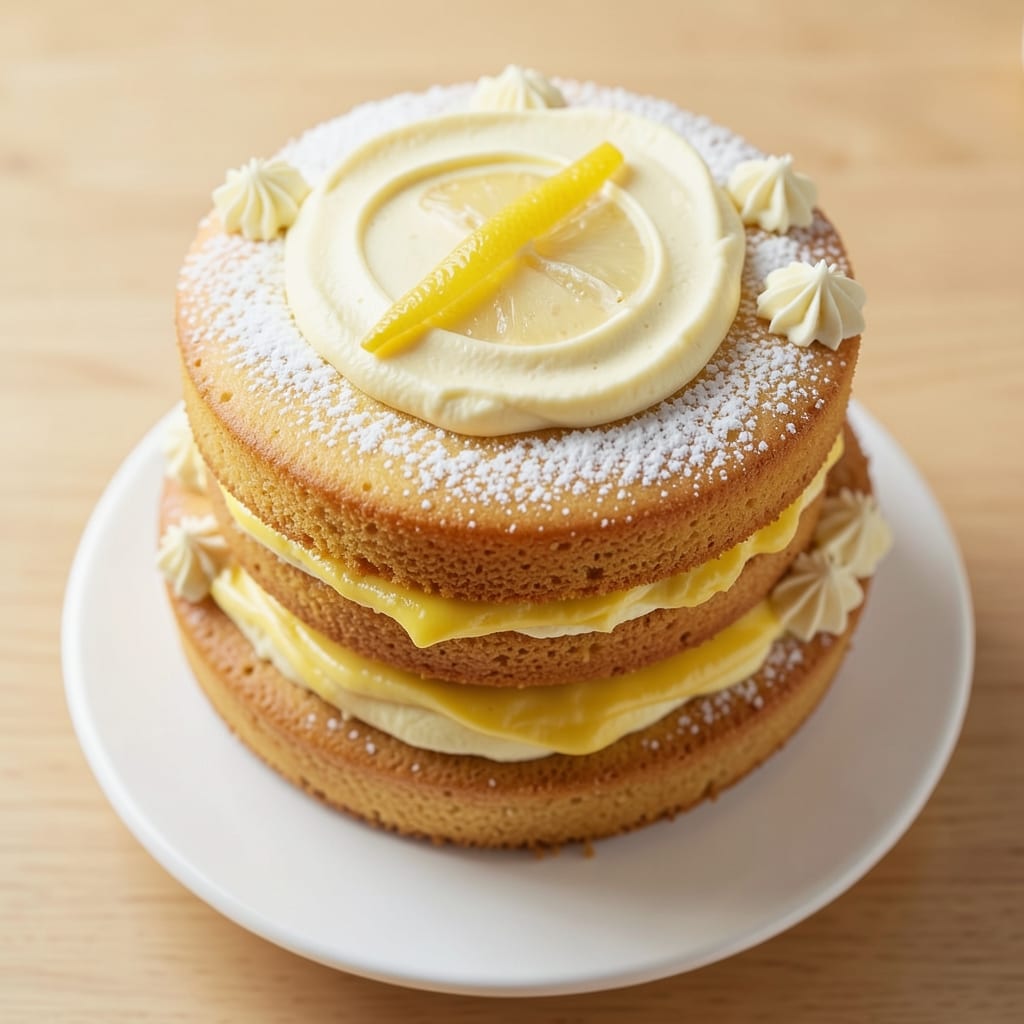
A 10-inch lemon cake with layers of bright citrus and a buttery crumb base is the perfect balance of tangy freshness and rich texture—ideal for celebrations or a sunny afternoon treat. The secret lies in a tender cake batter infused with real lemon juice and zest, creating a flavor that's both vibrant and deeply satisfying. This recipe delivers a moist, fluffy crumb with just the right amount of structure, ensuring each slice is as impressive as it is delicious.
The recipe begins with a foolproof cake batter that combines all-purpose flour, baking powder, and a touch of salt for balance. Butter and sugar are creamed together until light and fluffy, then folded with eggs and lemon juice for that signature citrus brightness. The layers are baked to a golden finish, then filled with a velvety lemon buttercream that ties everything together with its creamy sweetness.
What makes this cake truly special is its versatility—serve it at room temperature for a light dessert or slightly warmed for an extra comforting touch. The buttery crumb base ensures it stays fresh for days, making it perfect for meal prep or gifting. Whether you're a seasoned baker or a beginner, this recipe delivers professional-quality results with minimal fuss.
The finishing touches—like a dusting of powdered sugar or fresh berries—elevate it from homemade to showstopper. Ready in about 1 hour (including baking and cooling), this cake is the ideal project for a weekend afternoon. Let's get started!
Ingredients for 10 inch lemon cake
Bright citrus and rich butter create this perfect 10-inch cake for any celebration.
| Ingredient | Amount | Notes |
|---|---|---|
| Unsalted Butter 🧈 | 1 ½ cups | Softened to room temperature |
| Granulated Sugar 🍚 | 2 ½ cups | Divided for cake and buttercream |
| All-Purpose Flour 🌾 | 2 ½ cups | Sifted before measuring |
| Baking Powder 🧂 | 2 tbsp | Spoon measured for accuracy |
| Salt 🧂 | ½ tsp | Fine sea salt preferred |
| Large Eggs 🥚 | 4 whole | Room temperature for best results |
| Fresh Lemon Juice 🍋 | ¾ cup | From 4-6 large lemons |
| Lemon Zest 🍋 | 2 tbsp | Finely grated, no pith |
| Heavy Cream 🥛 | 1 cup | Cold for buttercream |
| Powdered Sugar 🍚 | 3 cups | Sifted for smooth buttercream |
| Vanilla Extract 🌿 | 1 tsp | Pure vanilla preferred |
| Fresh Blueberries 🫐 | 1 ½ cups | Optional for filling layer |
The butter and sugar are the foundation here—use European-style butter if you can find it, like Plugrá, for that extra-rich flavor. The flour should be sifted to avoid dense layers, and King Arthur or Gold Medal brands are my go-to for reliable baking. For the lemon juice, freshly squeezed is non-negotiable—bottled juice lacks the bright, complex flavor. If you're using frozen blueberries, toss them in a bowl of cold water to thaw and drain well before folding into the batter. The zest should be finely grated, with no white pith—it's bitter and will ruin the delicate balance of flavors.
No fresh lemons? Bottled lemon juice works in a pinch, but it won't have the same depth of flavor. For the buttercream, if you're avoiding dairy, vegan butter or coconut cream can substitute, though the texture will be slightly softer. The powdered sugar should be sifted to prevent graininess in the final frosting. If you're short on time, pre-sifted flour from the baking aisle saves steps. The baking powder is crucial—don't skip measuring it accurately, or the cake will fall flat. For a deeper citrus flavor, you can add an extra tablespoon of zest, but start with the recipe as written to avoid overpowering the delicate balance.
This cake keeps beautifully—covered at room temperature for 2 days or wrapped tightly in the fridge for up to 5 days. The buttercream can be made a day ahead and stored in the fridge, then whipped back to smoothness before assembling. For a showstopper presentation, dust the top with powdered sugar or garnish with fresh berries. If you're making this ahead for a party, assemble the cake layers the night before and refrigerate—it holds together perfectly until serving time.
Why You'll Love This Recipe
- No Mixer Needed: I swear by this recipe when my mixer’s on the fritz—just cream butter and sugar by hand until light and fluffy. The butter’s rich depth (thanks to that slow creaming) carries through the whole cake, and honestly? It’s easier than it sounds.
- Zesty, Not Overpowering: That bright lemon flavor? It’s the star, but not so sharp it fights with the tender crumb. The sugar balances it perfectly, and the baking powder keeps it airy—no dry, sour aftertaste here. (Yes, even my lemon-skeptical husband goes back for seconds.)
- One-Bowl Wonder: Four ingredients, one bowl, zero fuss. I toss everything in—flour, baking powder, salt—then fold it in like I’m making a quick batch of cookies. No sifting, no extra steps, and the result? A cake that’s foolproof every time.
- Budget Bright Spot: This cake costs me pennies but feels like a treat. A stick of butter, a bag of sugar, and flour I already have? That’s it. And slices keep beautifully for days—great for lunches or when I need to impress without breaking the bank. (Between us, it’s my go-to for potlucks.)
Step-by-step instructions for 10-Inch lemon cake
Follow this method for a perfectly balanced citrus cake with tender layers and velvety buttercream.
Prepare Cake Layers and Buttercream
Preheat your oven to 350°F and grease three 10-inch round cake pans with the 1.5 cups unsalted butter, reserving ½ cup for the buttercream. Line the bottoms with parchment rounds for easy removal. In a large bowl, cream together the reserved ½ cup butter with 1 cup of the 2.5 cups granulated sugar until light and fluffy—about 3-4 minutes—until the mixture nearly doubles in volume.
In a separate bowl, whisk together the 2.5 cups all-purpose flour, 2 tbsp baking powder, and 0.5 tsp salt. Add the dry ingredients to the butter mixture in 3 additions, mixing just until combined. Beat in the 4 whole large eggs, one at a time, ensuring each is fully incorporated before adding the next. Stir in the 0.75 cup fresh lemon juice and 2 tbsp lemon zest until the batter is smooth and vibrant yellow.
Divide the batter evenly among the prepared pans. Bake for 25-30 minutes or until a toothpick inserted in the center comes out clean and the tops spring back when touched. Let the layers cool in the pans for 10 minutes, then transfer to a wire rack to cool completely.
Assemble the Cake with Blueberry Filling
While the cake layers cool, prepare the blueberry filling by gently tossing the 1.5 cups fresh blueberries with 2 tbsp of the remaining 1 cup granulated sugar. Set aside. In a separate bowl, whip the 1 cup heavy cream to soft peaks, then fold in the remaining 1 cup granulated sugar, 1 tsp vanilla extract, and 1 tbsp lemon zest until smooth.
Once the cake layers are completely cool, level the tops if needed. Place the first layer on a serving plate and spread a thin layer of the blueberry mixture over the top. Add the second layer, then spread another layer of blueberries. Top with the final layer and spread the remaining blueberry mixture evenly over the top. This creates a balanced contrast of tart berries and bright citrus.
Create the Lemon Buttercream and Frost the Cake
In a stand mixer fitted with the paddle attachment, beat the remaining 1 cup softened butter until smooth. Gradually add the 3 cups powdered sugar, mixing on low speed until combined. Increase the speed to medium and beat for 2-3 minutes until light and fluffy. Add the 0.75 cup fresh lemon juice and 1 tsp vanilla extract, mixing until fully incorporated and the buttercream reaches a smooth, pipeable consistency.
Spread a thin crumb coat over the entire cake using an offset spatula, then chill in the refrigerator for 15 minutes. This step prevents crumbs from mixing into the final frosting. Once chilled, apply a final layer of buttercream, smoothing the sides and top with a bench scraper. For a polished finish, use a cake comb to create decorative swirls or leave it smooth for an elegant look.
Pro Tips For Making 10 Inch Lemon Cake
- Use Room-Temp Butter: I learned this the hard way—cold butter creates pockets that won’t mix properly, leaving your cake dense and greasy. Let that butter sit out for 30-45 minutes (or microwave in 10-second bursts) until it’s soft enough to press with a finger but still holds shape. Your cake’s texture depends on this, so don’t rush it.
- Sift the Dry Mix Twice: Skimping on sifting means uneven distribution of baking powder and salt, which can lead to a cake that rises unevenly or tastes bland in spots. After mixing flour, sugar, and baking powder, give it another quick sift right before folding in the wet ingredients. This isn’t the prettiest method, but it’s the tastiest.
- Check Doneness at 325°F: Your oven runs hotter than it says, and lemon cakes are tricky—overbake them, and they turn rubbery. Insert a toothpick at the center when the timer goes off; if it comes out clean but the edges look set, you’re good. If it’s wet but the cake springs back slowly, bake another 3-5 minutes. No guessing—just test.
- Zest First, Juice Last: Fresh lemon zest packs way more flavor than bottled, but it dries out fast. Grate it right before mixing (about 2 tablespoons) and set it aside. Only juice the lemons after—this keeps your batter from getting watered down and ensures bright, punchy flavor. (Yes, even if you’re impatient like me.)
Troubleshooting your 10 inch lemon cake
Cake Layers Too Dense
Overmixing the batter is the #1 cause of dense layers. Once you've combined all ingredients, stop mixing as soon as the flour disappears—about 10-12 strokes with a spatula. I've found that using King Arthur Flour (sifted) and European-style butter like Plugrá helps create a lighter texture. Also, ensure your eggs are room temperature—cold eggs can make the batter too thick. 🍋
Buttercream Too Thin
If your buttercream isn't holding its shape, it's likely too warm or under-mixed. Chill your mixing bowl in the freezer for 5 minutes before whipping, and beat on medium-high speed for 3-4 minutes total. For extra stability, add 1 tbsp cornstarch to the powdered sugar. I've also had success using Land O'Lakes Heavy Whipping Cream—it whips up thicker than store-brand options.
Lemon Flavor Fading
Fresh lemon juice is non-negotiable—bottled juice lacks the bright acidity. If your cake tastes flat, try adding 1 extra tbsp lemon zest or 1 tsp lemon extract to the buttercream. For a deeper flavor, simmer ½ cup lemon juice with 2 tbsp sugar until reduced by half, then cool before using. Store-bought zest often contains bitter pith, so finely grate your own using a microplane. 💡
Cracks in the Frosting
Temperature shocks cause frosting cracks. Always apply a crumb coat and chill the cake for 15 minutes before adding the final layer. If cracks still appear, warm the buttercream slightly (by 10-15 seconds in the microwave) to make it more pliable. For a smooth finish, use a bench scraper to press frosting into crevices. I've found that Wilton 1M offset spatulas work best for this step.
Cake Sticking to Pans
Grease pans thoroughly with ½ cup melted butter, then dust with 2 tbsp flour (tap out excess). Line bottoms with parchment circles, but don't grease the parchment—this can cause soggy layers. For extra insurance, I use Wilton Non-Stick Pan Releasers on the sides. If cake still sticks, run a thin knife around the edges while warm to loosen it before cooling completely.
Blueberries Leaking
Toss blueberries with 1 tbsp cornstarch before assembling to absorb excess juices. For a firmer filling, simmer them with 1 tbsp sugar for 2 minutes until slightly softened. Spread filling only on the bottom layer—adding it between all layers can make the cake too wet. If using frozen berries, thaw and drain them well before mixing. 🫐
Nutrition facts
Frequently asked questions
Can I make this lemon cake without blueberries?
Skip the blueberries and use the extra 1 cup granulated sugar in the buttercream instead. For another variation, try a simple lemon curd filling between layers—just whisk ½ cup lemon juice, 3 egg yolks, ½ cup sugar, and ¼ cup butter until thickened. Chill before assembling.
How do I adjust this recipe for a smaller cake?
For a 6-inch cake, reduce all ingredients by ⅓ (use 1 cup butter, 1.5 cups sugar, 1.5 cups flour, etc.). For a 9-inch cake, multiply by 1.5x (round up slightly for extra filling). Always adjust baking time—smaller cakes bake 5-10 minutes faster than larger ones.
Can I use this recipe for a gluten-free version?
Yes, but with substitutions: swap 2.5 cups all-purpose flour for 2.5 cups gluten-free 1:1 baking flour (like Bob's Red Mill) plus 1 tbsp xanthan gum. Reduce baking powder to 1.5 tbsp and add ½ tsp cream of tartar for lift. Expect a slightly denser texture—gluten-free cakes benefit from 5 extra minutes in the oven.
How do I store leftovers?
Keep the cake covered at room temperature for 2 days or refrigerate for up to 5 days. For longer storage, freeze layers (unfrosted) for 3 months)—thaw overnight in the fridge before assembling. Buttercream can be made ahead and refrigerated; rewhip with 1 tsp lemon juice to restore smoothness.
Why does my cake sink in the middle?
Oven temperature fluctuations or opening the oven too soon are common causes. Always preheat for 15 minutes and avoid opening the door during the first 20 minutes. For extra insurance, bake at 325°F instead of 350°F—this prevents over-rising. If it happens, slice off the domed top and level before frosting.